Jul 23, 2026Buying Guides
Ink Remover for Fabric: A Guide for Garment Factories
Learn how garment factories can evaluate I-SPRAY Ink Remover for fresh pen and marker stains, with pre-wash trials, fabric checks, workflow, and sourcing advice.
Ink Remover for Fabric: A Guide for Garment Factories
Pen and marker stains are awkward production defects. The mark may be tiny, but an unsuitable cleaning method can spread the pigment, disturb the dye, or set the stain during washing. Finished garments, samples, uniforms, and cut panels all need a controlled response.
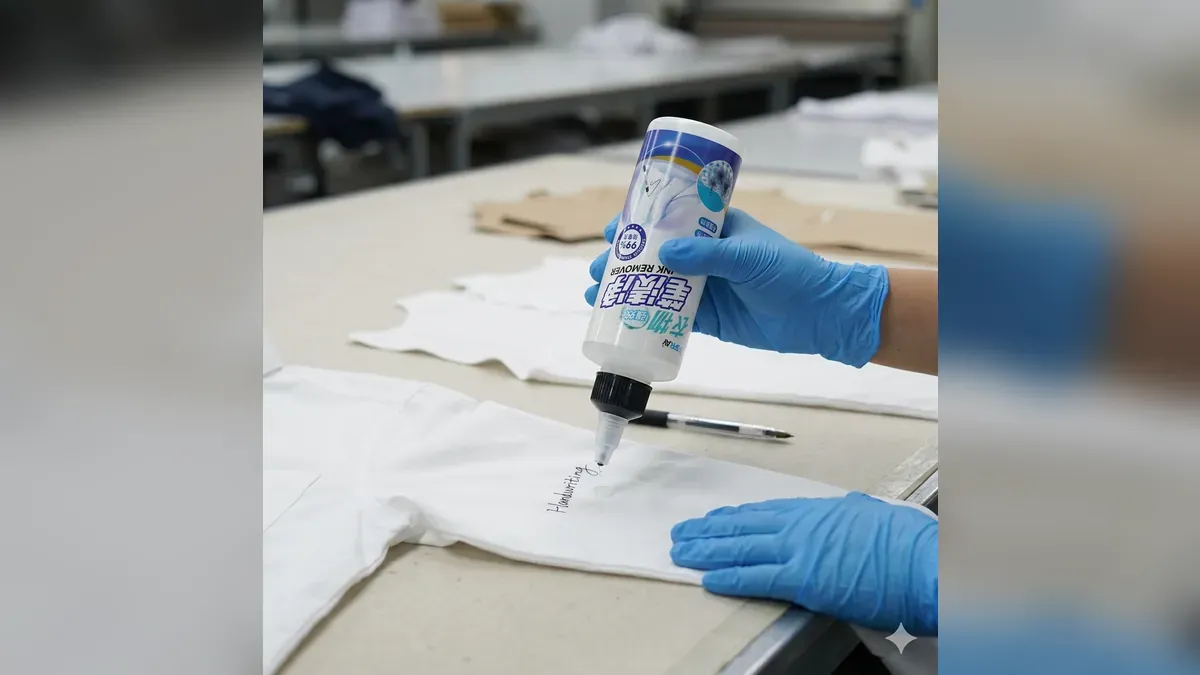
I-SPRAY Ink Remover is Huajie Chemical’s targeted pre-wash treatment for newly dyed pen ink, marker resin, and handwriting stains. The product page describes use on dry fabric before normal hand or machine washing and gives a dwell time of 3 to 10 minutes.
This narrower purpose separates it from a general fabric spot lifter. Buyers should still test it against the exact pens, markers, fabrics, and wash process used in their operation.
Why ink needs its own trial
“Ink” covers many formulations. Ballpoint paste, gel pen, permanent marker, production marking pen, stamp ink, and craft colorants use different dyes, pigments, oils, and resins. Age matters too. A fresh line on a cotton pocket may respond differently from a mark that has already passed through heat pressing or laundering.
Start the trial by listing the writing tools found on the factory floor. Collect the actual pens and markers rather than preparing samples with a convenient office pen. Include the usual fabric colors and finishes, and record how long the stain is allowed to sit before treatment.
For each test, keep an untreated control. The control shows whether the ink spreads or fades during normal washing without pretreatment and gives quality staff a fair reference.
Use the product before the wash step
Huajie’s published method calls for treating dry fabric before the stain contacts water or detergent. The page recommends laying the garment flat, applying the liquid directly to the ink, waiting 3 to 10 minutes, gently rubbing the area, and then washing as usual. Stubborn marks may require another treatment.
Turn that general method into an approved factory instruction. Define:
- the inks and fabrics covered by the procedure;
- maximum application amount;
- dwell time for each approved ink group;
- rubbing, blotting, or support material;
- permitted repeat treatment;
- subsequent wash method;
- stop conditions for color movement or surface change.
Do not send a treated garment into a bulk wash with other pieces until the transfer risk has been checked. A loosened pigment can move to adjacent fabric if the test procedure does not control it.
Check white and colored fabrics separately
The product page presents I-SPRAY Ink Remover for both white and colored textiles. That statement needs practical confirmation on the buyer’s materials. White fabric makes residual pigment easy to see, while dark and saturated colors make dye disturbance or a change in sheen more important.
Run the product on pale, dark, printed, coated, and delicate samples where they occur in production. Inspect after pretreatment, after washing, and after full drying. If the garment will be pressed, include that step before final approval.
A hidden-area check remains useful for one-off work. For regular production, retain tested offcuts and reference photographs so operators know the acceptable result.
Decide where ink treatment belongs in the line
The best treatment point is usually before the mark is exposed to water, heat, or extended storage. Factories can place an ink-control station near final inspection, in the sample room, or at a designated rework area. Keep the station away from clean finished goods and uncontrolled sources of heat.
Provide suitable ventilation and follow the current safety data sheet for storage, handling, and personal protection. The website explains the cleaning sequence; it does not replace the workplace risk assessment.
Operators should label unknown marks instead of guessing. A dark spot may be ink, machine oil, adhesive, dye transfer, or scorched material. Using the wrong treatment can make later identification difficult.
Measure more than stain disappearance
An ink remover may look effective during rubbing but still leave a shadow after washing. Use a scorecard that follows the sample through the entire cycle.
Record:
- pen or marker brand and type;
- stain age;
- fabric, color, print, and finish;
- amount applied and dwell time;
- rubbing or blotting method;
- result before washing;
- result after washing and drying;
- pigment spread or transfer;
- color, texture, and gloss change;
- operator time and repeat treatments.
Photograph every result in fixed lighting. “Mostly gone” is too subjective for a repeatable factory standard.
Ink remover versus fabric spot lifter
A general spot lifter is often selected for grease, oil, food, soil, or cleaning rings. A dedicated ink remover is designed around pen and marker residues and a pre-wash procedure. The two products may sit in the same textile-care range without serving the same job.
For oil and grease selection, use our fabric spot lifter guide. Do not combine the chemicals or alternate them on the same stain unless Huajie provides a documented, tested process.
What wholesale buyers should confirm
Ask for the current product specification, safety data sheet, packaging options, application directions, minimum order quantity, lead time, and transport information. If the product will carry a private label, agree on the exact stain claims and fabric language that the evidence supports.
The phrase “ink remover” can create very broad customer expectations. Clear label wording should identify the intended ink groups, pre-wash use, testing requirement, and any excluded materials. Good instructions reduce returns and misuse.
Package design also matters. The website’s directions refer to applying fluid through the cap rather than a general aerosol mist. Confirm the supplied closure and dosing method during sample approval, then make sure the final label matches that package.
Practical recommendation
I-SPRAY Ink Remover belongs on the shortlist when fresh pen, marker, or handwriting stains cause garment rework and the operation can add a controlled dry-fabric pretreatment before washing. Approval should cover the actual writing tools, fabric lots, colors, and wash sequence.
To request a trial, contact Huajie Chemical with photographs, stained swatches, the pens or markers involved, fabric details, wash method, target market, and order estimate.
FAQ
Should ink remover be applied before or after washing?
Huajie’s directions call for treatment on dry fabric before washing. Ink exposed to water, detergent, or heat may behave differently and can be harder to remove.
How long should I-SPRAY Ink Remover stay on the stain?
The product page gives a range of 3 to 10 minutes. Use a tested time for each approved ink and fabric combination rather than automatically choosing the maximum.
Can it remove permanent marker?
Permanent marker resin is included in the product’s stated target range. Results depend on the marker formulation, stain age, fabric, and finish, so a trial is necessary.
Is it safe for colored fabric?
The product is presented for white and colored fabrics, but colorfastness must be tested. Inspect after treatment, washing, drying, and any later pressing.
Can I use ink remover together with a spot lifter?
Do not mix or sequence products unless the supplier provides a documented procedure that has been tested on the relevant fabric and stain.