Jul 23, 2026Buying Guides
No-Fray Spray for Fabric Cutting and Sewing: Buyer Guide
Evaluate JJW-755 No Fray Spray for cut edges, thread slippage, samples, storage, sewing trials, fabric compatibility, and wholesale sourcing.
No-Fray Spray for Fabric Cutting and Sewing: Buyer Guide
Loose cut edges can distort a pattern piece before it reaches the sewing operator. Open weaves, slippery synthetics, satin, chiffon, denim, canvas, and technical fabrics fray in different ways, but the practical result is similar: lost seam allowance, loose threads, handling time, or a damaged sample.
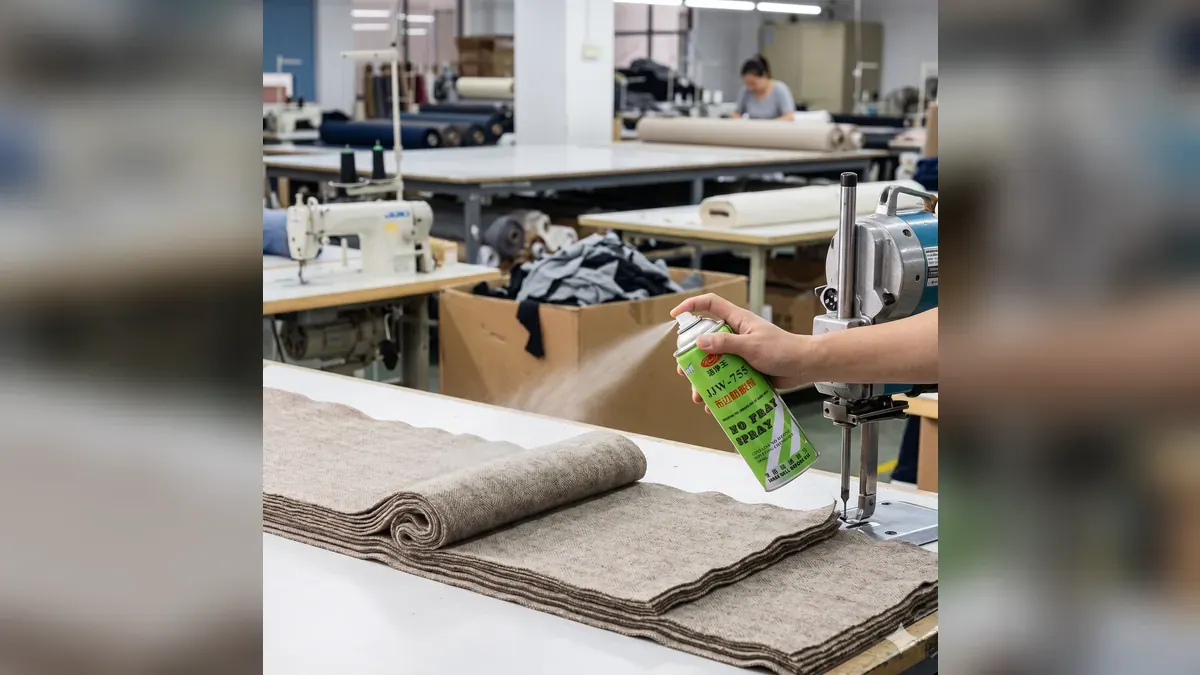
JJW-755 No Fray Spray is Huajie Chemical’s rapid-drying fabric stabilizer for raw edges and cut lines. The product page presents it for apparel, fine linen, denim, workwear, cut-and-sew operations, storage, and movement of pattern pieces between cutting and assembly.
The spray may reduce the need for temporary edge work in an approved application. It should not be treated as a universal replacement for overlocking, serging, seam construction, or a permanent structural finish.
Define the fraying problem
Before choosing a chemical edge stabilizer, identify when the damage occurs. Is the fabric unraveling during cutting, bundling, transport, sewing, fitting, storage, or the customer’s use? Is the issue limited to samples and temporary handling, or does the final edge remain exposed?
Record the fabric construction, fiber, finish, cut direction, seam allowance, cutting method, and amount of handling. A loose woven silk and a thick denim edge need different acceptance criteria.
Also check non-chemical solutions. A sharper blade, changed cutting direction, heat cutting for a suitable synthetic, adjusted seam allowance, improved bundling, or an earlier sewing step may solve the problem without introducing another material to the process.
Where JJW-755 may help
Huajie describes JJW-755 as binding loose edge fibers after a light mist along the raw edge or cut line. Its stated uses include silks, satins, chiffons, loose synthetics, denim, canvas, workwear, technical textiles, pattern pieces, and automated fabric-feeding operations.
The published sequence is simple: lay the material flat on a clean, dry surface, shake the can, apply a light uniform mist to the vulnerable edge, and allow it to dry before sewing.
Terms such as “instant,” “permanent,” or “no needle gumming” should be verified in the buyer’s process. Drying time, stiffness, needle behavior, wash response, and bond durability can change with the amount applied and the fabric.
Test the edge and the sewing operation
Prepare equal strips from the same fabric lot. Leave one untreated, apply JJW-755 to the others at controlled amounts, and handle them through the normal cutting-room route. Measure thread loss or edge width after bundling, transport, and sewing.
The trial should inspect:
- visible fraying before and after handling;
- change in color or gloss;
- stiffness, hand feel, and drape near the edge;
- drying time;
- tack or blocking when pieces are stacked;
- needle penetration and skipped stitches;
- residue on the needle, presser foot, feed system, or cutter;
- seam appearance and strength;
- response to pressing, washing, dry cleaning, or finishing;
- appearance of any exposed final edge.
Use the real production needle, thread, stitch density, and machine speed. A hand-sewn sample cannot predict behavior on a high-speed line.
Decide whether the treatment is temporary or permanent
For a sample room, stabilizing an edge until the piece is assembled may be enough. A final product with an exposed raw edge needs a longer evaluation. Confirm whether the treatment remains after washing or dry cleaning and whether that behavior suits the design.
If the finished garment must meet a flammability, restricted-substance, odor, hand-feel, or wash-performance requirement, include the treated edge in the relevant test. Do not assume that a small application is outside the customer specification.
Document whether the spray is allowed on visible areas. A stable edge that looks darker or feels hard can still fail quality inspection.
Set up the cutting-room method
Apply the product at a designated ventilated station, away from loose fibers, clean garments, ignition sources, and uncontrolled heat. Follow the current safety data sheet for storage and personal protection.
Use a template or guide if the spray band must stay within the seam allowance. Define the can distance, pass speed, number of passes, drying rack or wait time, and maximum stack height. Mark treated bundles so sewing operators know what material is entering the line.
Check the station for overspray. A stabilizer on the cutting table, pattern, ruler, belt, or machine part can transfer to later fabric. Cleaning the work surface is part of the process.
Calculate the value honestly
The product may save handling or temporary overedge work, but the saving should be measured. Compare labor, material use, drying space, rework, needle cleaning, and rejected pieces with the current method.
Track consumption per hundred or thousand cut pieces. A broad application on every edge may cost more and alter more fabric than a narrow treatment at a few vulnerable points.
If the current overlock becomes part of the final seam, it should not be counted as removable labor. JJW-755 is most attractive where the existing edge-control step is genuinely temporary or where fraying causes avoidable waste before sewing.
B2B buying checklist
Request the current safety data sheet, product specification, fabric and care-process guidance, packaging options, spray-pattern information, minimum order quantity, lead time, and transport documents. Ask Huajie which claims are supported for wash durability, needle cleanliness, drying time, and material compatibility.
For private-label work, make the instructions concrete. Explain test requirements, application area, drying, ventilation, and the fact that the product does not replace sound seam design. Avoid absolute wording across all fabrics.
Approve the aerosol valve and actuator with the formula. A narrow edge treatment needs predictable spray width and low overspray.
Practical recommendation
JJW-755 is worth testing when raw edges lose shape during cutting, handling, storage, or transfer to sewing and the factory wants a faster temporary stabilization method. Approval should cover the actual fabric, visible finish, machine sewing, downstream care, and cost per accepted piece.
To request a sample, contact Huajie Chemical with the fabric construction, photos of the fraying, current control method, seam design, care process, package requirement, and expected volume.
FAQ
What does no-fray spray do?
It applies a stabilizing material along a cut edge to hold loose threads during handling and sewing. The degree and duration of stabilization should be tested on the target fabric.
Can JJW-755 replace overlocking or serging?
It may replace a temporary edge-control step in an approved process, but it does not automatically replace structural stitching or a required finished seam.
Will it change the feel of fabric?
Any edge stabilizer can affect stiffness, drape, gloss, or color if the fabric or application amount is unsuitable. Test representative material.
Can the treated fabric be washed?
Include the intended washing or dry-cleaning cycle in approval. The required result depends on whether the treatment is meant to remain or only support production handling.
What should a factory monitor during sewing?
Check needle penetration, skipped stitches, thread tension, residue on machine parts, seam appearance, and whether the stabilized edge stays within the intended allowance.