Jul 23, 2026Buying Guides
Spray Adhesive for Fabric: Choosing a Production Formula
Choose spray adhesive for fabric positioning and textile production by bond type, spray pattern, open time, needle cleanliness, trials, cleanup, and B2B supply.
Spray Adhesive for Fabric: Choosing a Production Formula
Spray adhesive can hold fabric, backing, templates, or lightweight components in place while an operator aligns or processes them. The hard part is choosing the correct bond. A permanent adhesive may be useful for one assembly and a serious problem for temporary embroidery positioning. A coarse web pattern may suit composite layup but interfere with a textile needle or show through light fabric.
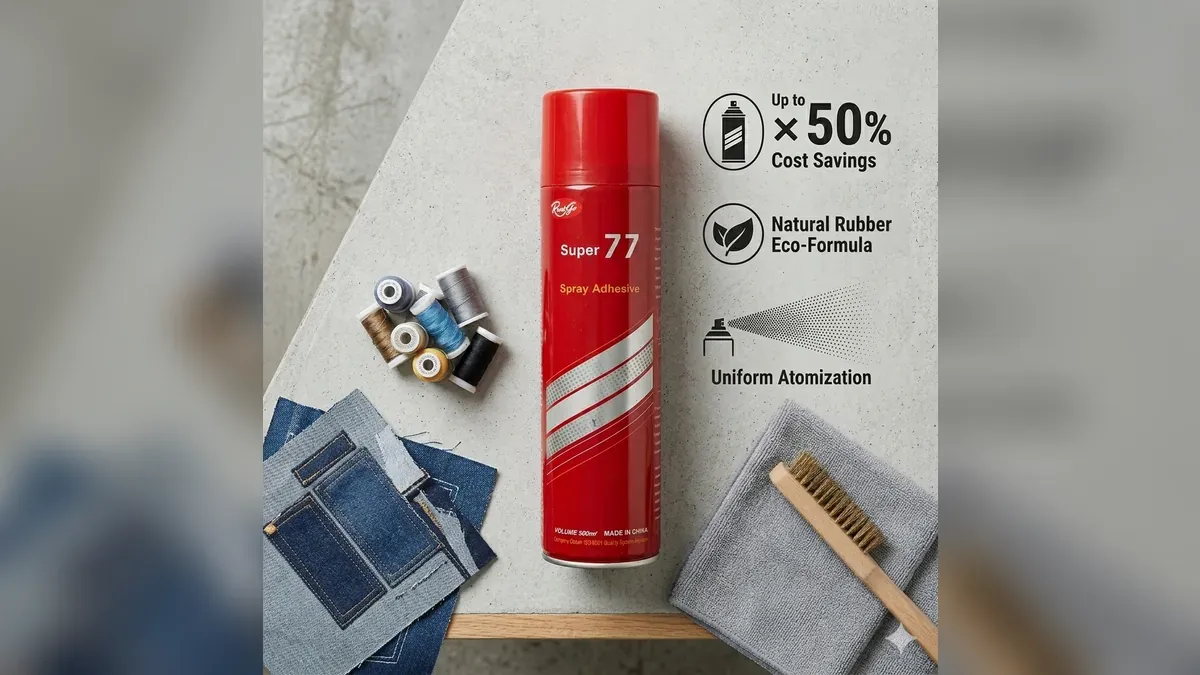
JJW-751 Super 77 Spray Adhesive is Huajie Chemical’s multipurpose high-solid adhesive with stated uses in computerized embroidery positioning, denim bonding, display mounting, prototypes, laminates, wood, plastics, light metals, and other assembly work. It is the logical starting product for this fabric-focused guide.
Huajie also lists JJW-189 Compound Material Spray Adhesive for fiberglass and composite layup and JJW-063 Super Adhesive Cleaner for residue removal. They belong to the same workflow only when their separate uses are understood.
Write the bonding brief first
Define what must be bonded, for how long, and what happens next. Include both substrate surfaces, their weight and porosity, the required position time, whether repositioning is needed, and whether the bond is temporary or permanent.
Then record the downstream process:
- sewing or embroidery;
- pressing or heat exposure;
- lamination;
- washing or dry cleaning;
- printing, coating, or dyeing;
- packing and storage;
- final customer contact.
The same adhesive may behave differently on cotton, coated synthetic, foam, backing paper, denim, and nonwoven material. “Fabric compatible” is not specific enough for approval.
What JJW-751 offers buyers
Huajie describes JJW-751 as a high-solid, natural-rubber-based formula that sprays a fine, even mist. The page emphasizes initial tack, permanent bonding, and broad coverage and names computerized embroidery positioning and denim fabric bonding among the textile uses.
Those claims create several useful trial questions. Does the mist stay on the target area or travel to nearby machines and fabric? Can the operator align the pieces during the available open time? Does the bond remain flexible? Does adhesive transfer to the needle, presser foot, hoop, cutter, or finished surface?
The website states that one coat may be sufficient and that the product can reduce adhesive consumption. Measure coverage and cost in the buyer’s application rather than repeating a percentage saving without test data.
Temporary positioning versus permanent bonding
Embroidery positioning often needs a controllable tack that holds backing or fabric without creating long-term stiffness or difficult residue. The JJW-751 page also describes permanent bonding. Ask Huajie whether the current formula and application method are intended for the exact temporary or permanent textile job.
Use a low, controlled application in the trial and check removal, wash response, and hand feel. If the adhesive is meant to stay in the product, test the final construction. If it is meant only to position material, define how and when residue is removed.
Do not use the product on garments that contact skin or on customer-facing surfaces until the relevant safety, migration, odor, and care requirements have been reviewed.
Spray pattern and open time are production variables
The valve and actuator determine how the adhesive reaches the surface. A fine mist can improve uniformity, but overspray can settle on guides, sensors, belts, floors, and adjacent goods. Approve the complete can rather than a bulk formula sample alone.
During the trial, record application distance, spray width, wet and dry appearance, mass used, open time, repositioning window, initial tack, final bond, and any stringing or puddling. Work under the normal temperature and humidity range because both can affect tack and drying.
Create a spray booth or controlled station with suitable ventilation and overspray capture. Follow the current safety data sheet and keep the work away from ignition sources and uncontrolled heat.
Why JJW-189 is a different product
JJW-189 Compound Material Spray Adhesive is positioned for fiberglass, carbon fiber, core materials, vacuum infusion, wind-turbine blades, yacht construction, and composite molds. Its page describes a web-like spray, a 25-to-30-minute open window, and repositionable tack for large layups.
Those features may sound attractive, but they solve a composite-manufacturing problem. Do not substitute JJW-189 for a garment or embroidery adhesive without explicit technical guidance and textile testing. Resin-flow considerations, web pattern, solids, and substrate scale differ from normal cut-and-sew work.
Keeping the products separate also improves SEO and sales clarity: JJW-751 leads the textile positioning discussion, while JJW-189 belongs in composite manufacturing content.
Plan adhesive cleanup before production
Overspray and residue should have a defined removal method before the adhesive reaches the line. Huajie’s JJW-063 Super Adhesive Cleaner is presented for PE hot melt, SBS, double-sided tape, and acrylic resin on equipment and textiles.
Compatibility testing is essential. The JJW-063 page includes a heated textile-cleaning procedure, but equipment temperature and fabric limits must come from a current technical method and the machine instructions. Do not improvise with heat.
Although the product page mentions skin cleanup, use the safety data sheet and workplace hygiene procedure instead of advising direct skin application. Select gloves and handling controls from the documented hazard information.
Run a production-scale adhesive trial
Small hand samples can hide overspray and equipment fouling. After basic material screening, run a limited production batch on the real machine.
Measure:
- alignment and slip during handling;
- open and repositioning time;
- bond strength appropriate to the job;
- fabric stiffness, color, gloss, and odor;
- needle or cutter residue;
- overspray on equipment and the work area;
- cleanup time and cleaner use;
- result after pressing, washing, or finishing;
- adhesive consumption per accepted piece.
Inspect again after storage. Some adhesive effects appear after pieces have been stacked under pressure.
B2B sourcing checklist
Request the current safety data sheet, product specification, supported substrates, application guide, bond type, spray-pattern sample, package sizes, minimum order quantity, lead time, transport information, and available private-label options.
Ask which environmental or market claims are supported by current documents. The JJW-751 page uses broad certification language; private-label wording should match the actual report scope and destination-market rules.
Agree on change control for formula, valve, actuator, and can pressure. A component change can alter coverage, mist, and tack even when the product name stays the same.
Practical recommendation
Start with JJW-751 when the brief involves embroidery positioning, denim, textile assembly, or a related multipurpose bond. Confirm whether the required bond is temporary or permanent and approve the whole spray system on the production line. Keep JJW-189 for composite applications unless Huajie documents another use. Qualify JJW-063 as a separate cleanup product.
To request samples, contact Huajie Chemical with both substrates, bond duration, open time, downstream process, current adhesive, package preference, and estimated volume.
FAQ
Can JJW-751 be used for embroidery positioning?
Computerized embroidery positioning is listed on its product page. Test tack, residue, needle cleanliness, removal, and wash behavior in the actual embroidery process.
Is JJW-751 temporary or permanent?
The website emphasizes permanent bonding while also listing positioning uses. Ask Huajie for the correct application method and test it against the required bond duration.
What is the difference between mist and web spray adhesive?
A mist creates fine droplets over an area. A web spray lays down strands or a patterned network. Coverage, overspray, open time, and suitability depend on the substrates and process.
Can JJW-189 be used instead of JJW-751 on fabric?
JJW-189 is positioned for composite layup rather than normal garment production. Do not substitute it without technical guidance and a textile trial.
How should adhesive overspray be cleaned?
Use a cleaner approved for the adhesive, surface, and equipment. Test a small area, follow the safety data sheet, and avoid uncontrolled heat or direct skin-cleaning advice.