Jul 23, 2026Buying Guides
Fusing Machine Cleaner Selection: JJW-820 vs JJW-818
Compare JJW-820 fusing machine cleaner with JJW-818 belt cleaner for adhesive residue, belt conditioning, anti-static needs, maintenance trials, and sourcing.
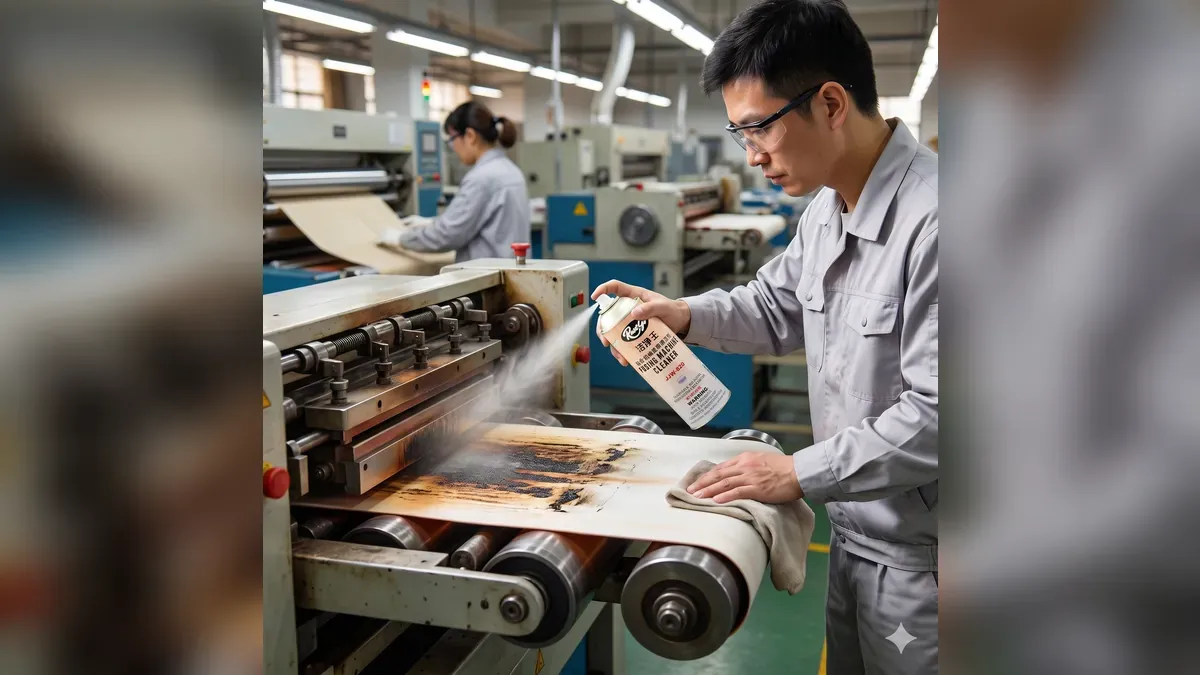
Fusing Machine Cleaner Selection: JJW-820 vs JJW-818
Hot-melt adhesive can transfer from interlining work to a fusing belt, roller, plate, or nearby pressing surface. As the residue heats repeatedly, it can become harder to remove and may mark later garments. Cleaning too aggressively creates another risk: damage to a coated belt or an unsafe maintenance task around hot moving equipment.
Huajie Chemical offers JJW-820 Fusing Machine Cleaner and JJW-818 Cleaner for Fusing Belt. Both target adhesive and resin buildup. JJW-820 is described as a high-viscosity silicone-based cleaner and conditioner with an anti-stick film. JJW-818 emphasizes belt cleaning, anti-static conditioning, and protection against repeat buildup.
The products overlap enough that buyers should compare current specifications and machine trials before choosing one.
Identify the deposit and the surface
Do not call every dark mark “glue.” A belt may carry hot-melt adhesive, starch, grease, melted synthetic fiber, lint, carbonized residue, or a mixture of several contaminants. Photograph the deposit and note where it forms, how quickly it returns, and which interlining or fabric program is running.
Record the belt or surface material as well. Teflon-coated belts, mesh belts, rubber components, rollers, metal plates, and ironing surfaces have different chemical and mechanical limits. The equipment manual should specify approved cleaning methods and the required shutdown and cooling state.
If buildup returns quickly, inspect the process. Excess adhesive, incorrect temperature, pressure, belt tracking, damaged interlining, or poor housekeeping may be the root cause.
JJW-820: high-viscosity cleaning and anti-stick conditioning
Huajie presents JJW-820 as a silicone-based, high-viscosity fluid for baked-on adhesive on fusing belts, rollers, heating plates, and commercial ironing assemblies. The page describes applying the fluid to the affected area, allowing it to loosen the residue, and wiping with a clean soft cloth. It also states that a slick silicone layer helps reduce fresh adhesive bonding.
The high-viscosity description suggests that retention on the surface is part of the product’s positioning. Buyers should test whether that behavior makes application easier or leaves too much film for their belt and fabric program.
The web page also makes heat and flammability statements. Confirm those points in the current safety data sheet and technical instructions before developing any hot-surface procedure. Never rely on marketing text for a fire or exposure assessment.
JJW-818: belt cleaning with anti-static emphasis
JJW-818 is described for adhesive overspray, interlining glue, grease, starch, and baked residue on fusing belts and ironing surfaces. Its main point of difference on the website is anti-static lubrication and longer-lasting belt conditioning.
Huajie also states that the product is designed for Teflon, rubber, and mesh belts. That compatibility should be confirmed for the exact belt grade and equipment maker. The published process is to apply the cleaner, allow it to penetrate and loosen the deposit, then wipe it away with a soft cloth.
If static cling contributes to tracking or contamination, include an appropriate observation or measurement in the comparison. Do not choose JJW-818 only because “anti-static” sounds useful when static has not been identified as a problem.
Compare the two products on a controlled section
Ask the machine supplier which test location and maintenance state are permitted. Work on a small defined section and keep the current cleaning method as a reference.
Record:
- deposit type and age;
- belt or surface material;
- machine state and surface temperature allowed by the procedure;
- amount of cleaner;
- dwell time;
- wiping passes and cloths used;
- residue removed;
- film, slip, or tracking change;
- marks on sacrificial fabric after restart;
- time until buildup returns;
- total maintenance downtime.
Use the same residue condition for both candidates. A fresh patch and a carbonized patch do not make a fair comparison.
Put safety before production speed
Fusing machines combine heat, moving belts, nip points, and electrical systems. Follow the manufacturer’s shutdown, isolation, cooling, ventilation, and restart procedure. Keep hands, cloths, and aerosol packages away from moving belts and rollers.
Do not apply either product to a hot or energized machine unless the equipment maker, product technical instructions, safety data sheet, and written factory procedure all support that exact method. “No production stop” should never be assumed from website wording.
After cleaning, remove loose cloth fibers and excess chemical. Run sacrificial material and inspect it before releasing customer garments. Check belt tracking and guards after maintenance.
Prevent residue from returning
A cleaner treats the result. Maintenance teams should also look for the cause.
Check interlining alignment, adhesive side, temperature, pressure, dwell time, belt condition, scraper or cleaning components, and operator loading. Review whether a recent material change coincided with the buildup. A small process correction can reduce chemical use and downtime.
Set the cleaning frequency from inspection rather than habit. Keep a simple log showing machine hours, product program, deposit severity, cleaning amount, and time. The record will reveal whether JJW-820 or JJW-818 extends the useful interval.
B2B purchasing questions
Ask Huajie for the current safety data sheet, product specification, machine and belt compatibility guidance, application instructions, package sizes, minimum order quantity, lead time, and transport documents. Request a written explanation of the formula and use-case difference between JJW-820 and JJW-818.
For distributors, avoid absolute statements such as “safe for every belt” or “non-flammable at any temperature.” Keep claims within the supplied documentation. Labels should direct users to the equipment manual and define shutdown, ventilation, and testing requirements.
The applicator matters. Confirm whether the supplied product is a spray, fluid, or another delivery form and approve the dosing method. The JJW-820 page describes a high-viscosity fluid, while JJW-818 is described as sprayed or applied.
Practical recommendation
Test JJW-820 when the buyer wants a high-viscosity silicone cleaner with anti-stick conditioning for approved fusing surfaces. Test JJW-818 when belt-focused cleaning and anti-static behavior are relevant. Let residue removal, restart cleanliness, belt behavior, and time to renewed buildup decide.
To arrange samples, contact Huajie Chemical with the fusing-machine model, belt material, adhesive type, deposit photographs, current cleaning method, required documents, and purchase estimate.
FAQ
What does a fusing machine cleaner remove?
The two Huajie products are presented for adhesive, resin, grease, starch, and baked deposits on compatible fusing belts, rollers, plates, and ironing surfaces.
What is the difference between JJW-820 and JJW-818?
JJW-820 emphasizes a high-viscosity silicone cleaner and anti-stick film. JJW-818 emphasizes belt cleaning and anti-static conditioning. Confirm the current specifications before purchase.
Can the cleaner be applied while the machine is hot?
Only under a documented method approved by the equipment maker and supported by the product’s current safety and technical information. Otherwise shut down, isolate, and cool the machine as required.
How can a factory check belt compatibility?
Identify the exact belt material and manufacturer, review approved chemicals, test a small section, and inspect tracking, coating, surface feel, and fabric transfer after restart.
Why does adhesive buildup return quickly?
Possible causes include excessive adhesive, incorrect interlining orientation, temperature or pressure settings, belt damage, tracking, or inadequate routine cleaning. Investigate the process as well as the cleaner.