Jul 23, 2026Buying Guides
Fabric Spot Lifter Comparison: JJW-836, 668 and 880
Compare JJW-836, JJW-668 and JJW-880 fabric spot lifters by stain focus, drying behavior, packaging, textile use, and B2B trial requirements.
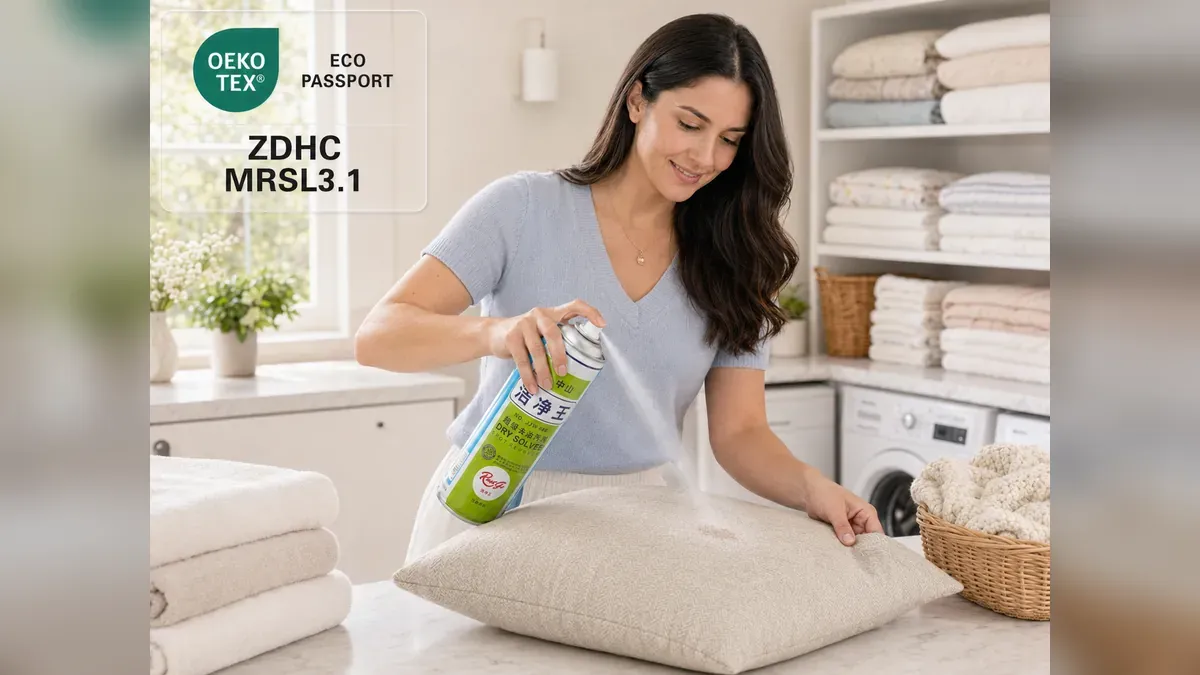
Fabric Spot Lifter Comparison: JJW-836, 668 and 880
JJW-836, JJW-668, and JJW-880 all sit in Huajie Chemical’s fabric spot-lifter range, and all three are presented for oil-based marks. Their product pages, however, give buyers different reasons to test them.
JJW-836 is the compact, targeted option and is shown in a 150 ml format. JJW-668 is positioned around oil-stain removal and an environmentally conscious product story. JJW-880 puts more emphasis on rapid drying and control of visible cleaning rings.
That is enough to build a shortlist. It is not enough to choose a factory formula without testing.
Quick comparison
Product | Main positioning on Huajie’s website | Details worth testing |
|---|---|---|
Fast, precise treatment of oil-based stains in a 150 ml pack | Spray control, cost per treatment, result on wool, cotton, silk, and synthetics | |
Oil-stain removal with eco-oriented retail positioning | Supporting formula documents, oily-residue removal, repeat-treatment rate | |
Fast drying, grease and oil removal, and reduced ring formation | Actual drying time, ring control on dark fabrics, compatibility with finishes |
The three descriptions overlap. A distributor should not create sharply different sales claims unless the current specifications and trial results support them.
Choose JJW-836 when package and precision matter
Huajie lists JJW-836 as a 150 ml spot lifter for oil-based stains, grease marks, and stubborn fabric spots. The page also names wool, cotton, silk, and synthetic textiles, subject to correct use and compatibility testing.
The smaller pack may suit retail kits, sample rooms, repair stations, or operators who need a portable can. Buyers should confirm whether the 150 ml format is standard for their order and whether other fill sizes are available. Package size affects cost, carton count, shelf positioning, and operator handling; it does not predict cleaning strength.
During a trial, look at the spray footprint. A narrow application can help on small marks, while a broad wet area may increase the chance of a visible boundary. Record the number of short sprays needed for a standard stain rather than relying on a general impression of “fast action.”
Choose JJW-668 when the retail story is a priority
JJW-668 is described as an oil-based stain remover for clothing and household fabrics. Its product page also mentions food, cosmetic, and everyday oily spills and presents the formula with an eco-friendly position.
If that positioning will appear on packaging, request the documents that define and support it. “Eco-friendly” can mean different things to buyers and regulators. A private-label brand should replace broad wording with a specific, supportable statement wherever possible.
From a performance standpoint, test JJW-668 on the oily soils the target customer actually encounters. Cosmetic oils, food grease, sewing lubricant, and workshop grime do not behave identically. A product that succeeds on one may need a different dwell time or repeat treatment on another.
Choose JJW-880 when turnaround and ring control matter
JJW-880 is positioned for grease and oil marks with rapid drying and a no-ring finish. Its page also states that the formula is free from ozone-depleting chemicals. Buyers who plan to use that environmental claim should request the current supporting declaration and make sure it covers the supplied SKU.
Fast drying can help an inspection or packing area, but measure it under real conditions. Temperature, humidity, ventilation, fabric weight, application amount, and stain load all influence how long the treated area takes to dry.
Ring control also needs a demanding test. Use dark fabrics, pale fabrics, tight weaves, open weaves, and materials with visible sheen. Inspect each sample after it is completely dry and again after any later pressing step.
Run one controlled comparison instead of three separate demonstrations
Prepare identical swatches from current fabric lots. Apply a consistent amount of the same contaminant to each, allow it to age for the same period, and treat it with each candidate under recorded conditions.
A practical scorecard should include:
- stain reduction after one application;
- drying time;
- ring or halo visibility;
- color, texture, print, and finish change;
- residue-removal effort;
- odor and ventilation needs;
- operator-to-operator variation;
- product used per successful treatment.
Photograph the samples under fixed lighting and keep an untreated control in every image. If one formula requires a different application method, record that difference rather than forcing all three into an unsuitable procedure.
Check the product’s place in the line
These three products focus on oil and grease. A factory that also sees ink, adhesive, fresh paint, or heavy industrial soil may need a second specialist product. Do not make a spot lifter responsible for marks it was not approved to handle.
Our broader fabric spot lifter guide explains how to organize a factory trial. Huajie also offers I-SPRAY Ink Remover for targeted pre-wash treatment of pen and marker stains.
Sourcing questions for distributors and brands
Ask Huajie to confirm the available can sizes, valves, actuators, caps, cartons, label languages, minimum order quantity, lead time, and sample route for each formula. Compare the current safety data sheets and product specifications side by side.
For private-label orders, agree on the approved spray pattern and performance reference. Packaging changes can alter the user experience even when the bulk formula remains the same.
Practical recommendation
Start with JJW-836 if a compact, controlled spot-treatment format suits the channel. Put JJW-668 into the trial when its oil-stain focus and documented environmental positioning fit the brand. Include JJW-880 when drying speed and ring control are important production criteria.
The final choice should come from the same-fabric, same-stain comparison. To request samples, send Huajie Chemical a short brief with your top stains, fabric mix, target market, package preference, and estimated order volume.
FAQ
Are JJW-836, JJW-668, and JJW-880 used for the same stains?
Their stated uses overlap around grease, oil, and localized fabric marks. JJW-880 emphasizes fast drying and ring control, while JJW-836 lists a 150 ml precision format and JJW-668 carries an eco-oriented position.
Which one is best for a garment factory?
The answer depends on fabric response, drying time, operator workflow, and the factory’s common stains. Run a controlled three-product trial before approval.
Can these products be used on delicate fabrics?
JJW-836 lists wool, cotton, silk, and synthetics. Regardless of the stated range, test every candidate on representative dyes and finishes before visible use.
Does fast drying always mean faster production?
Not necessarily. Repeat treatment, brushing effort, ring formation, and reinspection time all affect the total cycle.
What evidence should support an environmental claim?
Ask for a current, SKU-specific declaration or report, review its scope, and use wording that matches the evidence and destination-market rules.