Jul 29, 2026
What Is a Fabric Spot Lifter? Uses, Fabrics and Safety
Learn what a fabric spot lifter does, which stains and fabrics it suits, how to test and apply it, and when garment factories should use spot treatment.
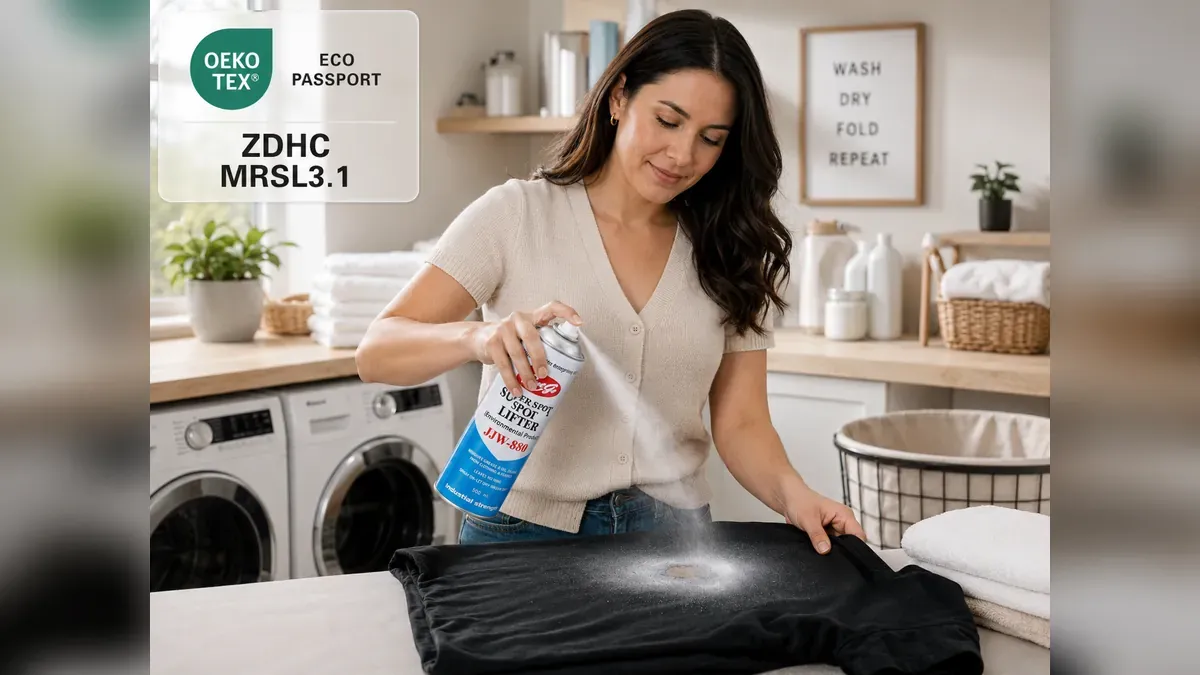
A fabric spot lifter is a localized stain-removal product used on garments and textile surfaces. Instead of cleaning the whole item again, the operator treats a specific oil mark, food spot, water ring, or production stain before it spreads or becomes harder to remove.
Spot treatment is useful in garment factories, textile finishing lines, sample rooms, laundries, dry-cleaning operations, and apparel retail. The goal is not only to loosen the stain. The treated area should also return to a clean, visually consistent appearance without unnecessary rework on the rest of the garment.
What Does a Fabric Spot Lifter Do?
A fabric spot lifter concentrates cleaning action on a small affected area. It is normally chosen when a full wash cycle would be inefficient, unnecessary, or unsuitable for the item.
Common situations include:
- An oil mark found during garment quality inspection
- Grease transferred from sewing or production equipment
- Food or grass stains on samples and finished apparel
- Water marks, ghost rings, or visible cleaning boundaries
- Localized stains discovered before packing or shipment
A spot lifter for clothes is different from a general-purpose surface cleaner. It must work on textile fibers, dyes, and finishes, so compatibility testing and controlled application are essential.
Which Stains Can Spot Treatment Help Remove?
Fabric spot lifters are commonly used for localized grease, oil, food, grass, and production-floor marks. Some formulas can also help reduce water marks, cleaning rings, oily residue, and visible stain boundaries.
Results depend on several factors:
- The stain type and how long it has been present
- Whether heat or another cleaner has already affected the stain
- The fabric fiber, dye, coating, and finish
- The amount of product applied
- The removal method used after the stain loosens
Fresh stains are generally easier to address than old or heat-set stains. Avoid making a stain worse by rubbing aggressively before identifying the material and stain type.
Which Fabrics Can Be Treated?
Compatibility depends on the formula. The product information for JJW-833 includes wool, cotton, silk, corduroy, Dacron, nylon, Orlon, and various synthetic fabrics within its application range.
That does not remove the need for testing. Fabric performance can vary because of dye systems, coatings, printing, finishing treatments, and previous cleaning. Before treating a visible area:
- Apply a small amount to an inside seam or hidden section.
- Wait long enough to observe the surface response.
- Check for color transfer, fading, texture change, or marking.
- Continue only when the test area remains acceptable.
Testing is particularly important for silk, dark colors, delicate finishes, specialty textiles, and high-value garments.
How to Use a Fabric Spot Lifter
The exact method should follow the product instructions and the factory's quality-control process. A careful general workflow is:
1. Identify the stain
Determine whether the mark is oil, grease, food, grass, water marking, or residue from an earlier cleaning attempt. This helps the operator choose an appropriate treatment and avoid unnecessary product use.
2. Test a hidden area
Check colorfastness and surface compatibility before treating the visible stain. Record the test method when the product will be introduced into a production line.
3. Apply only where needed
Use a controlled amount on the affected area. Saturating a large section can create additional rings, extend drying time, or make residue removal more difficult.
4. Allow the formula to work
Give the spot lifter time to loosen the residue. Excessive rubbing can stress fibers or alter the surface appearance.
5. Remove the lifted residue
Brush, blot, or clean away the loosened stain using a method appropriate for the fabric. Keep tools clean so they do not transfer oil or color back to the textile.
6. Inspect the treated area
Check the garment under consistent lighting. If the mark remains, repeat carefully rather than applying a large amount at once. Stop if the fabric shows color or texture changes.
Common Spot-Lifting Mistakes
Several avoidable mistakes can reduce results or damage the garment:
- Skipping the hidden-area compatibility test
- Treating every stain with the same method
- Applying too much product at one time
- Rubbing delicate fabrics aggressively
- Using contaminated brushes, cloths, or work surfaces
- Ignoring rings or boundaries after the stain is removed
- Approving a product for production without sample testing
For garment factories, a short written standard operating procedure is useful. It should identify who can perform spot treatment, what tools are approved, how treated items are inspected, and when an item must be removed from the normal production flow.
How Garment Factories Should Evaluate a Spot Lifter
A factory or distributor should evaluate more than a single demonstration stain. Use representative materials and operating conditions.
A practical sample test can include:
- The main fabrics, colors, and finishes in the product range
- Fresh and aged samples of typical production stains
- Controlled product amount and dwell time
- Standardized residue-removal tools
- Inspection under the same lighting used by quality control
- Comparison of treated and untreated reference areas
- Records of any color, odor, ring, or surface change
Commercial buyers should also confirm packaging, labeling, storage, transport requirements, available technical documents, order quantities, and OEM conditions. Our fabric spot lifter buying guide explains these purchasing checks in more detail.
JJW-833 Fabric Spot Lifter
JJW-833 Fabric Spot Lifter is a chlorinated-solvent-free option for localized textile stain treatment. It is designed for grease, oil, food spots, grass stains, oily residue, water marks, and visible cleaning rings across multiple garment and textile-care applications.
It is intended for garment factories, textile finishing operations, laundry-care programs, importers, distributors, and private-label projects. Buyers should test the actual formula with their fabrics and quality requirements before adopting it for large-scale use.
You can also review our broader textile-care product range when building a garment-care or production-cleaning program.
Frequently Asked Questions
Is a fabric spot lifter the same as laundry detergent?
No. Laundry detergent is generally used in a full wash process. A fabric spot lifter is intended for controlled treatment of a localized mark or stain.
Can a spot lifter remove oil and grease?
Oil and grease are common spot-treatment applications. Results still depend on the fabric, stain age, previous treatment, application method, and the formula used.
Can it be used on silk or dyed fabrics?
Some products include silk and dyed textiles within their application range, but a hidden-area colorfastness and compatibility test should always be completed first.
Why do cleaning rings appear?
Rings can form when dissolved residue, moisture, or cleaning product moves beyond the original stain boundary and dries unevenly. Controlled application and proper residue removal help reduce this risk.
Should factories test samples before purchasing?
Yes. Testing with representative stains, fabrics, colors, and production methods is more reliable than evaluating a product on one demonstration sample.
Choosing the Next Step
If you are evaluating fabric spot lifter supply for a garment factory, laundry-care range, or distribution business, prepare the fabric types, typical stains, target market, preferred packaging, and estimated volume. Then contact Huajie Chemical to discuss sample evaluation and current commercial requirements.