Jul 28, 2026Buying Guides
Fabric Rust Stain Remover: Garment Care Buyer Guide
Evaluate fabric rust stain remover for cotton, wool, T-shirts, suits, and sweaters by stain diagnosis, textile compatibility, test method, and supply.
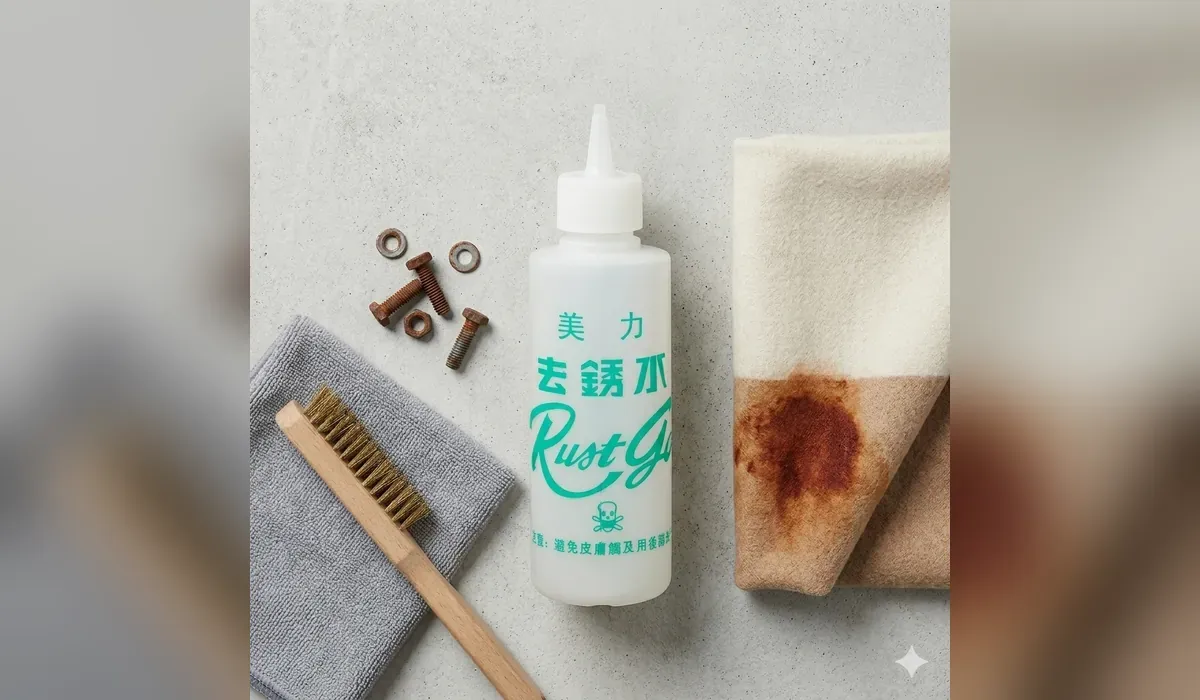
A fabric rust stain remover should be tested against the actual stain and textile before it is approved for garment care. Rust-colored marks can have different causes, and fabrics vary in fiber, dye, finish, construction, and prior treatment.
Huajie’s current product material describes JJW-021 Rust Remover for rust and stubborn stains on fabrics including wool, cotton T-shirts, suits, and sweaters. It is a textile stain-removal product, not a spray for stripping corrosion from metal parts.
Confirm that the mark is a rust stain
Collect information about:
- contact with a rusty hanger, machine part, water source, button, zipper, or storage fixture;
- fresh or aged stain;
- local spot or widespread discoloration;
- fiber content and blend;
- garment color and dye behavior;
- print, coating, interlining, trim, or decorative finish;
- previous detergent, bleach, solvent, heat, or stain treatment;
- washable, dry-clean-only, or specialist-care label;
- acceptable appearance and rework limit.
A brown or orange mark is not proof of iron rust. Dye transfer, oil, scorch, oxidation, and other soils can look similar. Misdiagnosis can waste the garment or make the stain harder to remove.
Correct the source as well as the stain
If a production line repeatedly creates rust marks, spot treatment is not the complete solution. Inspect tables, rails, racks, trolleys, presses, hangers, water, fasteners, and equipment surfaces.
Cleaning finished garments without fixing the contact point creates recurring rework. The stain-removal record can help maintenance teams locate the source.
Build a textile compatibility screen
Test the exact fabric or a production offcut before treating a valuable garment. Fiber names alone do not describe dye, finish, print, coating, or construction.
Check:
- color loss or color shift;
- ring formation;
- surface texture or hand-feel change;
- fiber weakening or roughness;
- print, coating, or trim damage;
- migration into lining or interlining;
- odor or residue after the complete process;
- appearance after drying and any required finishing.
Include dark, bright, pale, printed, and delicate materials from the intended range. A product that works on white cotton should not automatically be approved for dyed wool.
Follow the care label and professional process
The garment-care label and the facility’s approved method set important limits. Do not combine stain removers, bleach, acids, alkalis, solvents, or heat without a validated procedure.
If a garment is dry-clean-only or contains delicate trims, the responsible textile-care specialist should determine the method. A product description does not override the care instruction.
Standardize the stain-removal test
A useful B2B trial compares repeatable stained swatches or representative rejected garments.
Record:
- fabric code, fiber, color, finish, and construction;
- stain source, age, and approximate size;
- any prior treatment;
- product amount and application area;
- dwell time and agitation method;
- rinse, extraction, washing, or finishing step;
- drying conditions;
- stain result and material change;
- number of treatment cycles.
Photograph samples under the same lighting before and after treatment. Keep untreated and current-process controls. A heavily edited marketing image is not a test record.
Evaluate stain reduction and textile condition together
A clean-looking spot is not a success if the fabric is bleached, weakened, ringed, roughened, or visibly different after pressing.
Set an acceptance scale that includes:
- stain removed, reduced, unchanged, or spread;
- no visible color change;
- no ring or tide mark;
- no damage to fiber, finish, print, or trim;
- acceptable odor and residue;
- acceptable result after final finishing.
For production use, track rework time and garment salvage rate rather than reporting only isolated success stories.
Prevent rings and stain migration
Localized wet treatment can move dissolved soil outward. The result depends on product amount, application control, absorbent support, agitation, extraction, rinsing, and drying.
Train operators on:
- using the minimum validated amount;
- working within the approved spot-treatment area;
- changing absorbent material when it becomes contaminated;
- avoiding transfer to clean layers;
- completing the specified neutralization, rinse, or wash step if required;
- inspecting only after the textile is fully dry and finished.
The exact procedure must come from the approved product method and textile trial. Do not invent a generic home remedy around a professional chemical.
Fit the product into a garment-care workflow
Factories and laundries should define when a stained item is:
- treated on line;
- sent to a dedicated spotting station;
- held for supervisor review;
- processed by a specialist cleaner;
- rejected because treatment risk exceeds value.
Record the product batch, garment order, operator, stain type, result, and any damage. This supports training and supplier investigation.
Keep JJW-021 separate from dry-powder spot lifters and ink removers. A spot lifter may be selected for suitable oil or grease stains, while an ink remover addresses pen or marker soils. Product roles should follow stain type.
Safety and documentation
Request the current SDS, product specification, application instructions, approved textile guidance, exclusions, storage information, batch coding, and any test evidence.
The facility should assess ventilation, PPE, chemical storage, spill response, waste, labeling, and operator training. Textile compatibility claims should identify the tested materials and method.
Avoid unsupported statements such as “safe for every fabric,” “no color loss,” or “professional results at home.” Even when a product is intended for wool and cotton applications, actual garments require testing.
Distributor and private-label checklist
Confirm:
- intended stain and textile scope;
- application, rinse, wash, and finishing method;
- incompatibilities and exclusions;
- pack size, closure, applicator, label, and carton;
- label directions, warnings, languages, and destination-market needs;
- sample set covering target fabrics and colors;
- batch traceability and retention;
- fill, closure, appearance, and packaging checks;
- complaint investigation and change control;
- MOQ, lead time, and reorder plan.
For commercial claims, retain before-and-after test records using representative textiles. Clear scope is more credible than promising one bottle for every stain.
Huajie’s garment-factory aerosol buying guide provides a wider framework for spot lifters, lubricants, finishing aids, and production cleaners.
Final recommendation
Choose fabric rust stain remover through stain diagnosis and textile testing. Approve it only when the validated process reduces the stain without unacceptable color, fiber, finish, trim, odor, or residue changes.
To discuss JJW-021 samples or private label, contact Huajie Chemical with the stain source, fabrics, colors, workflow, market, package, and expected volume.
FAQ
Is JJW-021 a metal rust remover?
No. Huajie’s current product material describes JJW-021 for rust and stubborn stains on fabrics, including wool, cotton T-shirts, suits, and sweaters.
Can fabric rust remover be used on every textile?
No universal compatibility should be assumed. Test the exact fiber, dye, finish, print, coating, construction, and trim, and follow the garment-care instructions.
How should a factory test rust stain remover?
Use documented stained swatches or representative garments, an untreated control, a standardized application and finishing process, consistent lighting, and acceptance criteria for stain reduction and textile condition.
Why can a ring appear after spot treatment?
Dissolved soil or treatment liquid can migrate outward. Product amount, support material, agitation, extraction, rinsing, and drying all influence the result.
What information should a buyer give the supplier?
Provide the stain source and age, fabric and color range, previous treatments, care method, current results, destination market, package needs, and volume.