Jul 28, 2026Buying Guides
Pre-Charged Aerosol Can: Local Filling Sourcing Guide
Source pre-charged aerosol cans for local filling by defining the fill material, can and valve compatibility, filling process, safety, testing, and logistics.
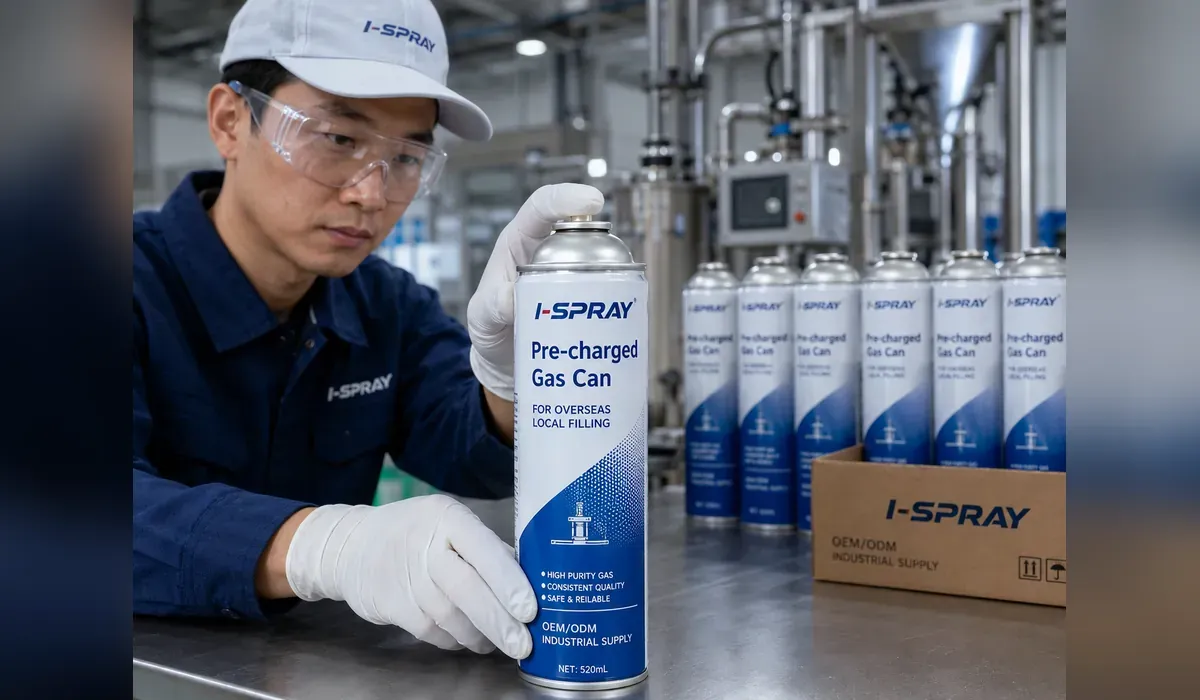
A pre-charged aerosol can should be sourced as part of a controlled filling system, not as an empty package that can accept any liquid. The buyer must define the intended fill material, can and valve compatibility, filling equipment, target fill quantity, operating method, legal responsibilities, and quality checks.
Local filling can offer flexibility for certain maintenance products and service channels, but pressurized packaging introduces technical, transport, workplace, and regulatory obligations. Use qualified personnel and an approved process.
Define the local filling model
- intended liquid or product family;
- chemical composition and physical properties;
- target fill quantity;
- required spray pattern and discharge rate;
- filling method and equipment;
- valve and adapter connection;
- filling location and operator controls;
- finished-product market and use;
- can labeling before and after filling;
- storage, transport, and distribution route;
- expected monthly or annual volume.
The term “pre-charged” does not establish compatibility. The can body, lining, valve, seals, propellant system, filling adapter, and liquid all interact.
Clarify who is the finished-product manufacturer
When a local party adds material, labels the can, and places the finished aerosol on the market, responsibilities may change. Before ordering, identify who controls the formula, filling specification, quality release, labeling, safety data, transport classification, traceability, and complaint handling.
Legal and regulatory requirements vary by market and product. Obtain qualified advice for the intended country and use rather than copying a label from another aerosol.
Screen chemical and package compatibility
Provide sufficient formula information to the can-system supplier under appropriate confidentiality arrangements. A trade name or broad phrase such as “paint” or “cleaner” is not enough.
Compatibility review may need to consider:
- solvent and water content;
- acidity or alkalinity;
- dissolved solids, pigments, resins, oils, or reactive ingredients;
- viscosity and particle size;
- corrosion risk to the can;
- swelling or extraction from seals;
- blockage of the valve or actuator;
- separation during storage;
- pressure and discharge behavior;
- expected shelf life and storage temperature.
Do not fill unknown, incompatible, prohibited, unstable, or reactive materials. Never treat a general compatibility result as approval for every formula in a product family.
The valve is part of the formula system
Valve stem, cup, gasket, spring, dip tube, actuator, and any filling adapter affect sealing and delivery. A package that holds one liquid may leak, clog, swell, or spray poorly with another.
Approve the exact component set. If a gasket, valve, actuator, lining, or supplier changes, review whether compatibility and performance testing must be repeated.
Validate the filling operation
The local facility needs documented equipment, calibration, ventilation, ignition control, operator training, PPE, inspection, and emergency procedures suitable for pressurized aerosols and the intended material.
A pilot should define:
- incoming inspection of cans and components;
- identification and conditioning of fill material;
- filling equipment setup;
- target and allowable fill quantity;
- valve connection and filling sequence;
- leak and weight checks;
- spray-output and pattern checks;
- cleaning and line-clearance method;
- quarantine and release;
- records linking component and liquid batches.
Do not improvise filling with unapproved adapters or tools. The supplier and filling-equipment provider should confirm the intended interface.
Build a finished-can quality plan
Incoming pre-charged cans are only one input. The locally filled aerosol must be evaluated after filling and through the required storage period.
Useful checks may include:
- can and valve appearance;
- net fill or weight control;
- leakage;
- pressure or other package checks under an approved method;
- spray pattern and discharge rate;
- clogging and sputtering;
- usable evacuation;
- compatibility and corrosion observations;
- label adhesion and legibility;
- batch code and traceability;
- carton condition.
The exact release tests and limits should come from the approved product specification and applicable requirements. Do not invent limits from another formula.
Retain samples from finished batches
Retained cans help investigate leakage, clogging, corrosion, spray change, or customer complaints. Store them under defined conditions and keep records for the period required by the quality plan.
Where shelf life is claimed, support it with an appropriate program covering the finished formulation and package, not the pre-charged can alone.
Review safety, transport, and storage
Pre-charged and finished aerosol cans are pressurized goods. Transport classification and documentation depend on the product and route. Local filling may change the finished description, hazards, and label information.
Review:
- SDS or equivalent information for incoming and finished materials;
- workplace chemical and pressure-system risk assessment;
- ventilation and ignition-source controls;
- temperature and storage limits;
- segregation and fire protection;
- damaged-can handling;
- waste and disposal;
- shipping classification, packaging, marks, and documents;
- local rules for filling and placing the finished product on the market.
The supplier’s paperwork does not replace the local filler’s responsibility for its operation and finished product.
Compare local filling with finished-aerosol supply
Local filling may suit channels that need short runs, custom colors or materials, service-shop flexibility, or separation of liquid supply from pressurized packaging. It also adds process ownership and capital or partner requirements.
Finished-aerosol supply may offer centralized filling and release, but can involve different MOQs, freight, inventory, and customization choices.
Compare:
- qualified filling capability;
- technical ownership;
- component and liquid logistics;
- batch size and changeovers;
- quality testing;
- regulatory and labeling work;
- transport cost and restrictions;
- inventory risk;
- complaint investigation;
- total cost per conforming finished can.
The cheapest incoming can is not the lowest-cost program if local rejects, leakage, rework, or compliance work are ignored.
Supplier qualification checklist
Ask the pre-charged-can supplier for:
- package specification and component list;
- intended filling interface;
- can, valve, seal, lining, actuator, and adapter information;
- declared limitations and storage conditions;
- batch coding and traceability;
- incoming quality and leakage controls;
- compatibility-support process;
- sample and pilot quantities;
- change notification;
- carton and transport configuration;
- MOQ, lead time, component availability, and reorder planning.
For adjacent finished products, Huajie’s industrial maintenance aerosol guide explains how formulas and aerosol packages should be evaluated together.
Final recommendation
Source pre-charged aerosol cans only after the complete local filling system is defined. Qualify chemical compatibility, valve and adapter, filling equipment, safety controls, finished-can tests, traceability, labeling, and transport responsibilities before scale-up.
To discuss a sample program, contact Huajie Chemical with the intended fill material, filling equipment, market, finished use, package needs, and forecast volume.
FAQ
Can any liquid be filled into a pre-charged aerosol can?
No. The liquid must be reviewed and tested with the exact can, lining, valve, seals, propellant system, actuator, and filling process.
What information does the supplier need?
Provide formula and physical-property information, target fill, spray requirement, equipment, adapter, market, finished use, storage, transport route, and expected volume.
Who is responsible for the finished aerosol?
Responsibilities depend on the supply chain and market. The parties should define control of filling, quality release, labeling, safety information, transport, traceability, and complaints before launch.
What should be tested after local filling?
Use the approved specification to check fill, leakage, package condition, spray output, clogging, compatibility, corrosion, labeling, traceability, and storage performance.
Is local filling always cheaper?
No. Compare equipment, labor, safety controls, quality testing, rejects, compliance, transport, inventory, and complaint handling as well as the incoming can price.