Jul 28, 2026Buying Guides
Spray Grease for Machinery: Lubrication Buyer Guide
Choose spray grease for machinery by defining the lubrication point, load, speed, environment, film, compatibility, delivery system, and maintenance test.
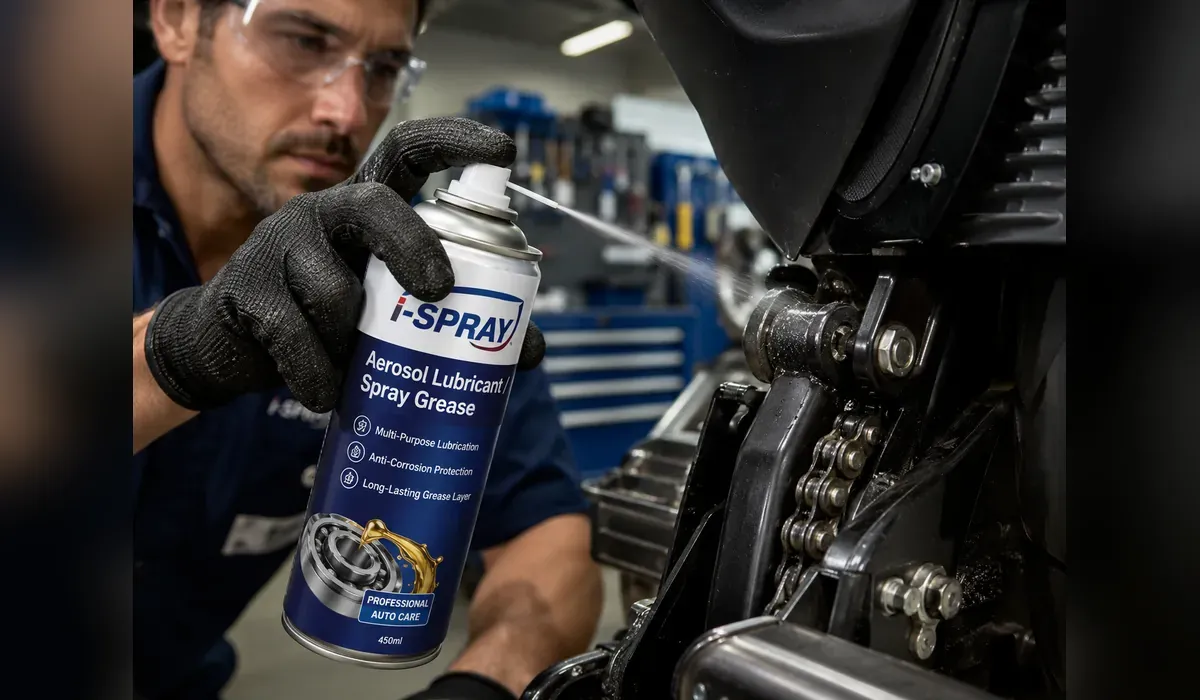
Spray grease for machinery is useful when a maintenance point needs controlled aerosol access followed by a more persistent lubricating film. It should be chosen for a specified component, movement, load, speed, temperature, environment, and maintenance interval.
Do not approve spray grease because it looks thick or stops one squeak. The film must reach the intended surface, remain appropriate during service, avoid contaminating nearby operations, and fit the equipment maker’s lubrication requirements.
Define the lubrication point
I-SPRAY Aerosol Lubricant / Spray Grease belongs in the ongoing-lubrication part of a maintenance range. Prepare a brief that identifies:
- hinge, chain, linkage, gear, slide, bearing surface, cable, or other point;
- metal, plastic, elastomer, coating, and seal materials nearby;
- load, speed, motion, and duty cycle;
- operating and application temperatures;
- water, humidity, dust, chemicals, or outdoor exposure;
- current lubricant and relubrication interval;
- acceptable film thickness, color, odor, and residue;
- access and need for an extension tube;
- risk of overspray on floors, brakes, belts, textiles, packaging, or products;
- cleaning and shutdown process.
“Machinery” is not a specification. A slow exposed hinge and a fast enclosed bearing have different lubrication needs.
Follow the equipment maker’s requirements
The machine or component manufacturer may specify lubricant type, consistency, compatibility, quantity, and interval. An aerosol format does not override those requirements.
Do not use a spray grease where a centralized system, sealed bearing, food-grade lubricant, electrically compatible product, or another specialty lubricant is required unless the exact product is approved for that use.
Distinguish spray grease from adjacent products
Range overlap causes wrong use and poor sales training.
Spray grease
The intended advantage is aerosol delivery to the point followed by a grease-like lubricating film. Buyers should evaluate placement, film development, persistence, and contamination pickup.
Bolt loosener
I-SPRAY Bolt Loosener prioritizes access and penetration around seized fasteners. It may support disassembly but is not automatically the selected ongoing lubricant.
Multipurpose maintenance fluid
JJW-854 RD-40 can be compared when a brief includes moisture displacement, freeing action, light lubrication, or general corrosion protection. The required film and service interval should determine the choice.
Huajie’s industrial maintenance aerosol guide gives a broader framework for separating penetrants, lubricants, cleaners, and coatings.
Prepare the point before testing
New lubricant applied over old grease, abrasive dust, cleaner residue, or an incompatible product can produce misleading results. Follow the equipment procedure for isolation, guarding, cleaning, and relubrication.
Record:
- prior lubricant and its condition;
- cleaning product and drying time;
- surface condition;
- amount applied;
- application distance and access;
- time allowed for the film to develop;
- machine condition during application;
- return-to-service method.
If complete removal of the old product is not practical, include that real condition in a separate compatibility trial.
Evaluate aerosol delivery
The package must place lubricant where it is needed. Inspect:
- broad spray and focused-jet options;
- extension-tube fit and retention;
- control in short bursts;
- penetration into the target gap;
- dripping and run-off before the film sets;
- overspray;
- valve leakage;
- clogging after intermittent storage;
- spray consistency through the can’s usable life;
- cap and tube storage.
Measure useful delivery, not only discharge rate. A fast can may waste material around a small point. A weak or erratic jet may fail to reach a recessed linkage.
Inspect the resulting film
After the stated setting period, check:
- coverage of the intended surfaces;
- adhesion or tendency to run away;
- visible gaps;
- consistency after motion begins;
- sling or migration at operating speed;
- dust and contamination pickup;
- wash-off or displacement where relevant;
- effect on nearby paint, plastic, rubber, seals, and labels;
- cleanup at the next maintenance interval.
Thicker is not always better. Excess grease can attract contamination, interfere with sensors, reach a product zone, or hide inspection points.
Use a representative service trial
Bench checks help compare spray pattern and film. A controlled machine trial shows whether the product supports the required interval.
Define observations at startup, after a set number of cycles or hours, and before the next planned service. Track noise or friction only with a method appropriate to the component. Also record temperature, leakage, contamination, product consumption, cleanup, and operator feedback.
Do not extend the maintenance interval solely because the film remains visible. The equipment procedure and validated condition criteria should govern the interval.
Compatibility and contamination risks
Spray grease can reach areas beyond the target. Protect friction surfaces, brakes, belts, electrical contacts, sensors, floors, fabrics, packaging, and finished products.
Ask for material guidance, then test actual plastics, elastomers, paints, and seals when damage would be consequential. A compatibility result from one polymer grade should not be generalized to every material.
For food, pharmaceutical, cleanroom, oxygen-service, or other controlled uses, obtain a lubricant specifically approved for that application. Do not infer approval from an industrial product name.
Compare total maintenance cost
Useful procurement measures include:
- amount used per point;
- time to apply;
- ability to reach the point without disassembly;
- leakage or overspray waste;
- service interval achieved under the approved method;
- cleanup time;
- component wear or replacement data where available;
- inventory reduction only when applications genuinely overlap.
A low can price does not offset frequent reapplication or contamination. A premium price also needs a documented operational benefit.
Documents and private-label checks
Request the current SDS, product specification, application instructions, material guidance, storage and transport information, batch traceability, and any test evidence linked to the exact SKU.
For private label, confirm:
- intended applications and exclusions;
- formula and accepted film behavior;
- can size and fill quantity;
- valve, actuator, extension tube, cap, and carton;
- label directions, warnings, languages, and market requirements;
- sample and pilot approval;
- leakage, spray-output, fill, and appearance checks;
- batch retention and complaint investigation;
- component change control;
- MOQ, lead time, and reorder plan.
Approve the formula and delivery hardware together. A valve or actuator change can alter how much grease reaches the point.
Final recommendation
Choose spray grease for machinery by the lubrication point and service conditions. Verify equipment requirements, prepare the surface consistently, test delivery and film behavior, control overspray, and confirm the maintenance interval with representative operation.
For samples or private-label sourcing, contact Huajie Chemical with the component, load and speed, environment, current lubricant, package preference, market, and volume.
FAQ
What is spray grease used for?
It is considered where aerosol access and a more persistent lubricating film are appropriate for a machinery point. Suitability depends on the component and equipment requirements.
Is spray grease the same as bolt loosener?
No. Bolt loosener prioritizes penetration around seized fasteners. Spray grease is selected for ongoing lubrication where its remaining film is suitable.
Can spray grease be used on plastic or rubber?
Only when the exact materials and product are compatible. Test representative grades and follow the equipment and product instructions.
How should a plant test spray grease?
Standardize cleaning and application, inspect delivery and film, run a controlled service trial, and record consumption, contamination, temperature, leakage, cleanup, and the approved service interval.
Why test the actuator?
The actuator and extension tube control access, quantity, overspray, and waste. A suitable formula can still perform poorly if the package cannot deliver it to the target.