Jul 23, 2026Buying Guides
Thread Trimming Machine Lubricant: Maintenance Guide
Learn how to evaluate JJW-853 thread trimming machine lubricant for blades and gears, with maintenance planning, contamination checks, trials, and B2B sourcing.
Thread Trimming Machine Lubricant: Maintenance Guide
An automatic thread trimmer makes thousands of short cutting movements close to fabric and thread. When the blade or drive develops excess friction, the first signs may be small: a rough cut, a missed trim, more noise, or lint collecting around the mechanism. If the cause is ignored, operators may compensate by slowing down or recutting threads by hand.
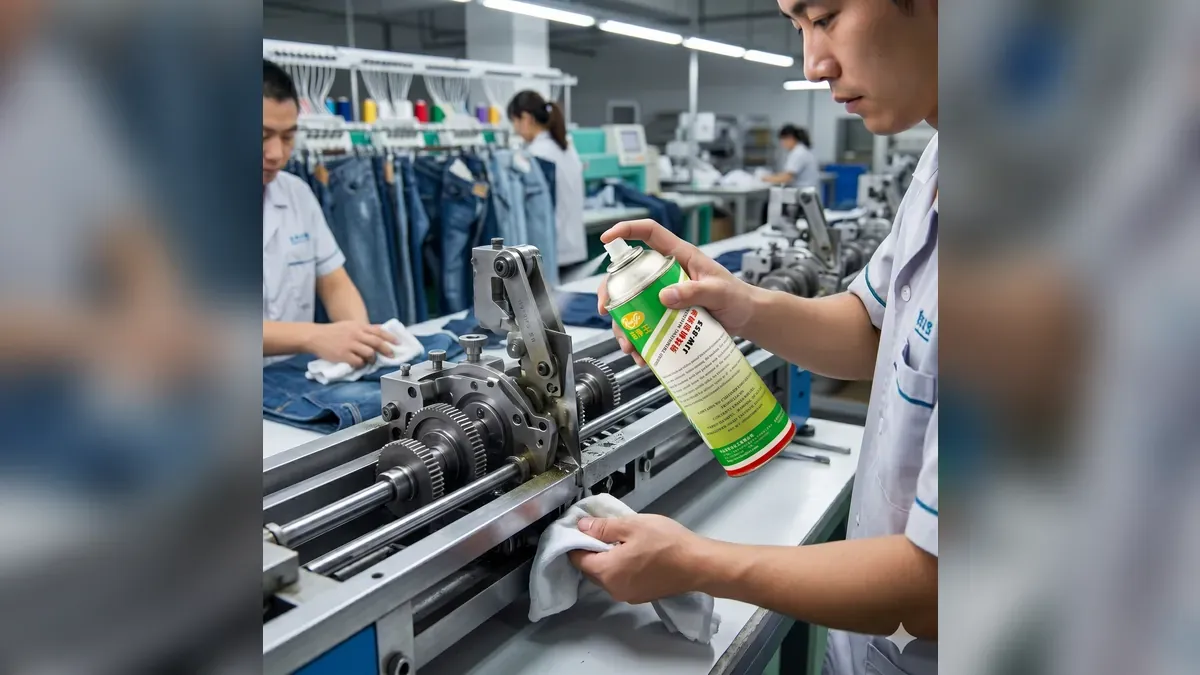
JJW-853 Thread Trimming Machine Lubricant is Huajie Chemical’s targeted product for trimmer blades, small gears, and drive linkages. The product page positions it for automated embroidery stations, lockstitch and overlock trimming assemblies, apparel production, hosiery, denim, and heavier textile lines.
A lubricant can support the maintenance plan, but it should not hide a worn blade, poor adjustment, damaged gear, lint blockage, or incorrect machine setting.
Diagnose the fault before applying lubricant
Start with the machine manual and the maintenance history. Record the symptom, when it occurs, and which materials or programs trigger it. Check blade condition, alignment, spring tension, thread path, lint, fasteners, guards, and the lubrication points specified by the equipment maker.
Common observations include:
- frayed or incomplete thread cuts;
- increased trimming noise;
- heat at the cutter housing;
- intermittent jamming;
- slow blade return;
- lint mixed with old lubricant;
- oil or spray reaching the fabric path.
If the blade is blunt or the mechanism is out of adjustment, adding more lubricant will not correct the mechanical problem. Repair or replace the faulty part first.
Where JJW-853 is intended to work
Huajie describes JJW-853 as a treatment for active trimming blades and central drive components. The page states that it penetrates small gear assemblies and linkages, reduces friction and noise, and is intended to avoid a sticky film that traps lint.
Those points should be checked during a sample trial. Ask Huajie for the current application instructions and product specification, then compare them with the machine maker’s permitted lubricant type. Confirm compatibility with seals, plastics, coatings, and any original lubricant already present.
Do not spray the product into an unknown housing. Some components are factory-sealed, use a different grease, or should be serviced only by a technician.
Build a safe application procedure
The product page describes application to the blades and drive parts before a shift, periodic attention during operation, low-speed movement to help distribution, and wiping exposed gears with a clean dry cloth. It mentions an hourly maintenance cycle, but that frequency should not be copied automatically to every machine.
Set the interval from the equipment manual, production load, trial result, and maintenance inspection. A plant running one shift on light fabric may not need the same schedule as a multi-head embroidery line working continuously.
A factory procedure should state:
- machine model and approved points;
- shutdown, isolation, and guard requirements;
- amount and application tool;
- whether controlled low-speed movement is permitted;
- wipe-down method;
- drying or settling time;
- sacrificial test cycle;
- inspection and reapplication criteria.
Never place hands or a spray can near an exposed moving knife or gear. Follow the machine manufacturer’s lockout and service instructions.
Keep lubricant away from the garment
The trimmer sits close to the sewing area, so contamination control matters as much as friction reduction. Remove or shield fabric and thread during maintenance. Clean excess product from the blade housing and nearby surfaces, then run waste material before returning the machine to production.
Inspect pale and dark test fabric for spots. Also check whether lint begins to collect differently after several hours. A lubricant that looks clean immediately after application may pick up dust later if too much was used.
For products that will be printed, bonded, coated, or washed later, include the downstream step in the trial. A small transferred film may not be visible at the sewing station.
Measure whether maintenance improves
Choose a machine with a known, repeatable condition. Record a baseline for at least one representative production period.
Useful measures include:
- missed or incomplete trims per thousand cycles;
- manual recuts;
- blade changes;
- jams and stoppage minutes;
- noise or vibration observations;
- lint accumulation at inspection;
- maintenance time;
- fabric contamination;
- product used per shift.
After applying JJW-853 through the approved method, collect the same data. If performance improves only briefly, investigate wear or adjustment instead of shortening the spray interval without limit.
Lubricant is one part of trimmer care
Regular cleaning, blade inspection, alignment, correct thread settings, and timely part replacement remain necessary. Keep a machine-level log so maintenance teams can see whether a particular cutter consumes more lubricant or blades than similar equipment.
Train operators to report a change in trimming sound or cut quality early. They should not apply maintenance chemicals unless the plant has assigned that task and provided instructions.
Store JJW-853 according to its current safety data sheet and keep the labeled product at the designated maintenance station. Decanted or unmarked containers create avoidable errors.
What distributors and factory buyers should confirm
Request the current specification, safety data sheet, application guide, packaging options, transport information, minimum order quantity, lead time, and sample process. Ask which trimmer materials and machine types have been evaluated and whether Huajie can provide guidance for the buyer’s model.
For private-label orders, keep the claims tied to lubrication and maintenance use. Do not promise a fixed blade-life increase or maintenance interval without test data. The label should make clear that the machine manual and shutdown procedure take priority.
Approve the complete aerosol package, including the actuator and any extension tube. Access and spray control affect overspray risk around a small trimming mechanism.
Practical recommendation
JJW-853 is a logical trial candidate when a factory needs controlled lubrication for thread-trimming blades and their small drive parts. First confirm that the machine permits the lubricant type. Then measure trimming performance and contamination over a normal production period.
To request a sample, contact Huajie Chemical with the machine model, trimming mechanism, fabric and thread types, current lubricant, operating hours, maintenance problem, and expected purchase volume.
FAQ
How often should a thread trimming machine be lubricated?
Use the machine maker’s maintenance schedule and adjust only through a documented trial. Huajie’s page mentions an hourly cycle, but that is not automatically suitable for every model and workload.
Can lubricant fix a dull trimming blade?
No. Lubrication may reduce friction, but a worn or damaged blade still needs sharpening or replacement according to the machine procedure.
Should the machine run while lubricant is applied?
Only if the manufacturer and a written factory procedure allow controlled movement. Keep hands and the can away from moving knives and gears.
How can a factory prevent fabric spots?
Remove or shield material, apply the minimum approved amount, wipe excess, run sacrificial fabric, and inspect both immediate and downstream results.
What should a buyer send with a sample request?
Send the machine model, application point, current maintenance routine, operating load, observed fault, compatible-material requirements, and target order size.