Jul 23, 2026Buying Guides
Spray Starch for Garment Finishing: JJW-891 vs 890
Compare JJW-891 and JJW-890 spray starch for garment finishing, pressing lines, uniforms, linens, fabric trials, application control, and wholesale buying.
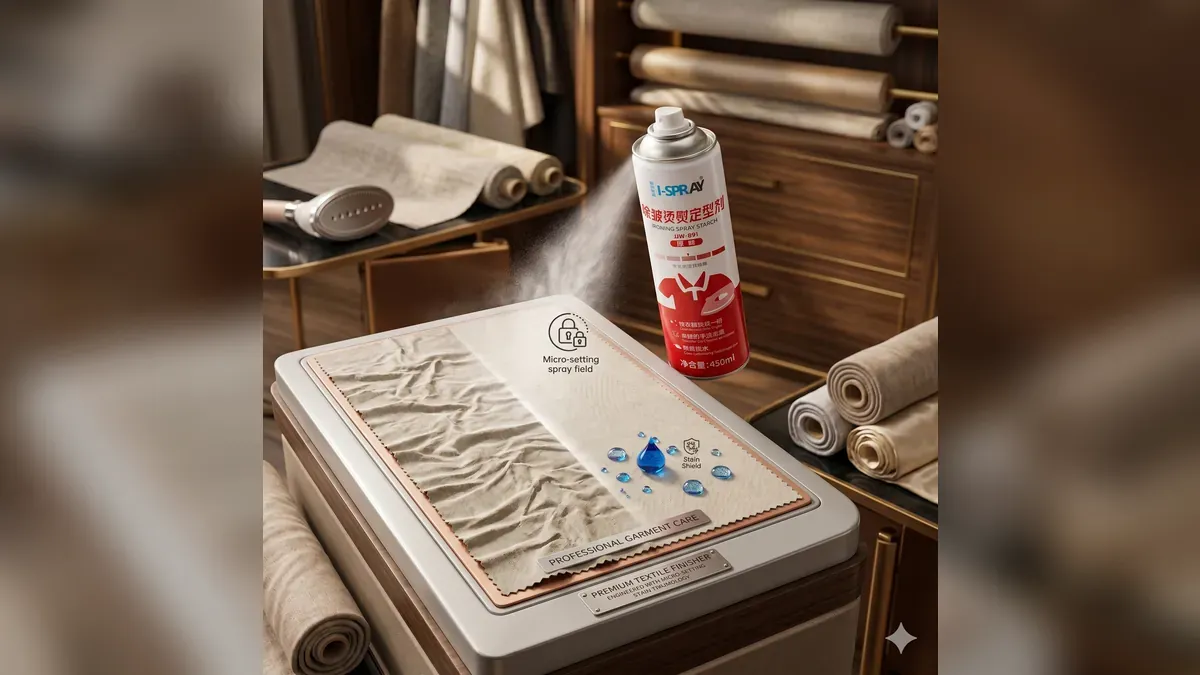
Spray Starch for Garment Finishing: JJW-891 vs 890
Spray starch can make pressing easier and help a garment or linen hold a crisp appearance, but too much product can leave stiffness, visible deposits, or an uneven hand feel. On a production line, the useful measure is not how firm one sample feels. It is whether operators can repeat the finish across fabrics, shifts, and batches.
Huajie Chemical offers JJW-891 Ironing Spray Starch and JJW-890 Ironing Spray Starch. Both are presented for washable fabrics, commercial pressing, garment finishing, hospitality linens, table textiles, and other high-volume ironing work. Both emphasize wrinkle reduction, a soft rather than board-like finish, easier iron glide, and resistance to everyday soil.
Their public descriptions are close. Buyers should compare samples and specifications instead of creating an unsupported performance gap between the model numbers.
What the two products have in common
The product pages describe a light, even mist applied from 20 to 30 cm before ironing or pressing. Both products are intended to smooth wrinkles while retaining fabric softness. Huajie also presents them as helping later washing by limiting how readily soil settles into the weave.
JJW-891 uses the language of a “micro-setting” or lightweight polymer finish. JJW-890 is described as a textile-grade finisher for commercial laundry and garment lines. Those phrases indicate market positioning, not enough technical detail to predict the exact finish.
Request the current product specifications if resin type, solids, fragrance, residue, heat response, or compatibility with a customer standard affects approval.
Define the finish before testing
“Crisp” means different things for a dress shirt, hotel sheet, tablecloth, uniform, delicate blouse, or sofa slipcover. Write a short finish standard for each product group.
It might cover:
- crease sharpness;
- overall stiffness or drape;
- surface smoothness;
- visible residue on dark fabric;
- iron or press glide;
- odor after cooling;
- resistance to handling during packing;
- appearance after storage or transport;
- wash-out behavior in the next laundry cycle.
Use approved reference samples where possible. They are clearer than a score such as “medium crispness” with no physical example.
How to test JJW-891
JJW-891 is presented for apparel, workwear, hotel bed linen, pillowcases, tablecloths, napkins, canvas slipcovers, and commercial furnishings. The published method is to lay the washable fabric flat, shake the can, apply a light and even mist from 20 to 30 cm, and press with a hot iron or industrial system.
Start with the minimum even application. Over-saturating one area can distort the comparison and increase the chance of deposits. Weighing the can before and after a controlled number of pieces is a simple way to estimate consumption.
Inspect the fabric only after it has cooled. Heat can temporarily change hand feel and odor. Recheck after packing pressure or overnight storage if those conditions matter to the customer.
How to test JJW-890
JJW-890 is positioned for commercial garment and laundry hubs, uniform programs, formal wear, retail apparel, hotel linens, table textiles, slipcovers, and final textile finishing before packing. Its web directions also specify a light mist from 20 to 30 cm followed by ironing or pressing.
Run JJW-890 on the same equipment, fabric lot, application amount, and press settings used for JJW-891. Do not let one product benefit from a heavier spray or higher temperature unless its documented method requires that difference.
If the factory uses vacuum tables, steam irons, tunnel finishers, or continuous presses, confirm the product’s approved route. A handheld-iron demonstration does not automatically prove compatibility with every industrial system.
Compare process performance, not marketing language
Use a blind sample review if possible. Label the back of each piece with a code so the quality team does not know which product was applied.
Record:
- fabric and construction;
- application amount and distance;
- iron or press temperature, pressure, and speed;
- number of passes;
- operator effort and drag;
- crease and wrinkle result;
- softness, drape, and visible residue;
- yellowing, spotting, or surface change;
- result after cooling, packing, and washing;
- cost per accepted finished piece.
The two products may perform similarly on one cotton shirt and differently on a dark synthetic uniform. Approve by fabric group rather than declaring one formula universally better.
Keep the pressing process under control
Follow the garment care label and equipment manufacturer’s temperature limits. Spray starch does not make excessive heat safe. Clean the iron soleplate and pressing surface on a defined schedule, because accumulated finish can transfer to later pieces.
Separate spray application from open flame and uncontrolled heat, and follow the current safety data sheet for ventilation, storage, and handling. Apply only as directed; do not spray an aerosol toward an energized heating element.
Train operators to maintain distance and movement. A stationary heavy spray can create a darker wet patch and uneven finish, while a very light pass from too far away may never reach the fabric evenly.
Buying questions for commercial and private-label programs
Ask Huajie to explain the current difference between JJW-891 and JJW-890 and provide specifications for both. Confirm can sizes, spray valves, carton configuration, minimum order quantity, production lead time, transport documents, and sample availability.
For a private-label product, decide which uses can be stated without overpromising. Claims such as stain resistance, softness, or faster ironing should match the approved sample and supporting documentation. The label should also explain compatible fabrics, application distance, ventilation, heat precautions, and testing on an inconspicuous area.
Package approval should include the actuator. Uneven atomization can create poor finishing even when the formula is consistent.
Practical recommendation
Treat JJW-891 and JJW-890 as two candidates for the same controlled trial. JJW-891 may be the natural lead product when the buyer wants its micro-setting and broad textile-finishing position. JJW-890 may fit a commercial laundry or garment line that prefers its textile-grade positioning. The same-fabric comparison should decide the order.
To arrange samples, contact Huajie Chemical with the fabric groups, required finish, pressing equipment, target market, package preference, and expected volume.
FAQ
What is spray starch used for in garment finishing?
It is applied before ironing or pressing to help smooth wrinkles, set a crisper appearance, and improve glide. The approved amount depends on the fabric and required hand feel.
What is the difference between JJW-891 and JJW-890?
Their website descriptions overlap. JJW-891 emphasizes a micro-setting finish, while JJW-890 is positioned as a textile-grade commercial finisher. Ask for specifications and compare samples.
How far should the can be held from the fabric?
Both product pages state 20 to 30 cm. Apply a light, even mist and avoid saturating one area.
Can spray starch be used on every fabric?
The products are presented for washable fabrics, but care labels, dyes, finishes, and heat limits vary. Test representative material before production.
What should a factory measure during the trial?
Measure application amount, pressing time, crease quality, drape, residue, color change, operator consistency, wash-out behavior, and cost per accepted piece.