Jul 28, 2026Buying Guides
Road Marking Paint: Warehouse and Parking Lot Buyer Guide
Select aerosol road marking paint for warehouse and parking layouts by substrate, color, application control, drying, traffic, testing, and supply.
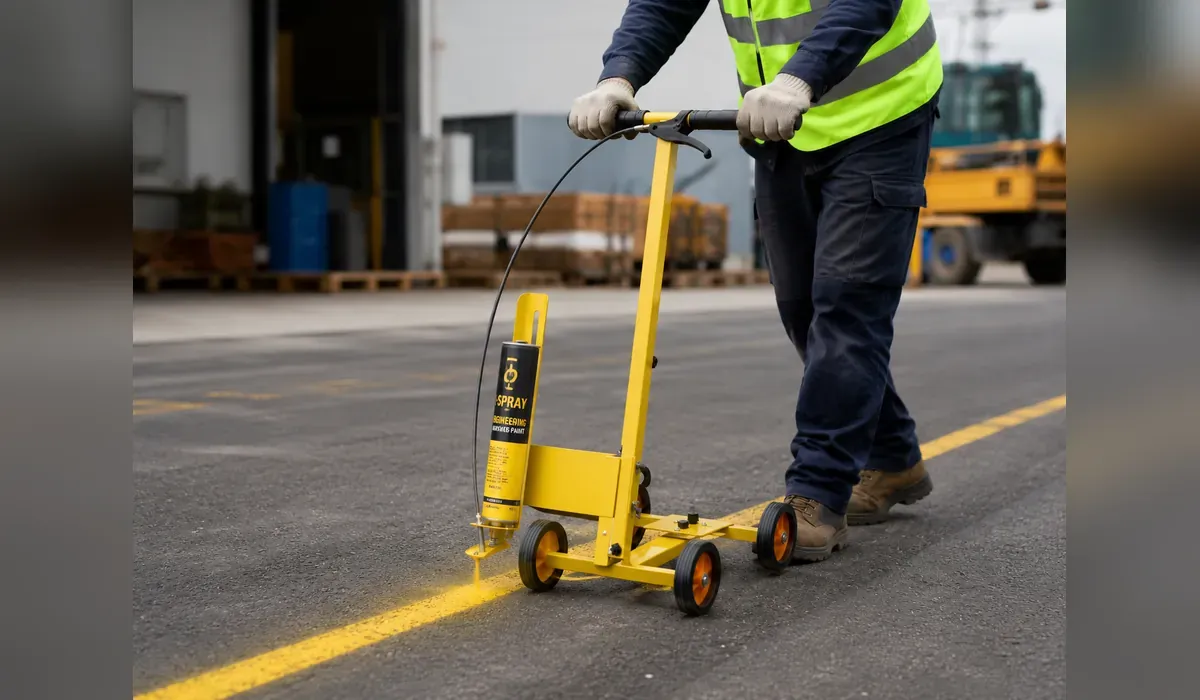
Road marking paint should be selected for a defined surface, layout, traffic level, application method, and maintenance cycle. Aerosol formats can be practical for small parking areas, warehouse zones, safety markings, touch-ups, and localized layouts, but the paint still needs a site trial.
For B2B buyers, color alone is not enough. Check surface preparation, line control, coverage, drying stages, adhesion, wear, visibility, package compatibility, and evidence for any outdoor or durability claim.
Define the marking job
I-SPRAY Road Marking Paint sits in the mark-and-repair group of an industrial range. A useful request should identify:
- concrete, asphalt, metal, or another surface;
- new marking, layout change, maintenance, or touch-up;
- indoor warehouse, loading area, parking lot, workshop, or temporary zone;
- pedestrian, pallet truck, forklift, or vehicle traffic;
- line width, length, symbols, and color;
- hand-held application or a compatible marking machine;
- temperature, humidity, and ventilation during work;
- time available before reopening;
- cleaning methods and expected contamination;
- planned inspection and repainting cycle.
The same yellow can may be asked to mark an indoor pedestrian lane or an exposed parking bay. Those projects should not share an untested durability assumption.
Separate permanent, maintenance, and temporary needs
Some sites need a durable traffic layout. Others need a short-term project boundary or frequent color changes. Buyers should state the expected service interval and removal or overcoating plan.
If a marking is safety-critical, the facility owner should set the required color, dimensions, visibility, and inspection process. Paint selection supports the plan; it does not replace site risk assessment or local requirements.
Inspect the existing surface
Marking failures often begin below the paint. Dust, oil, tyre residue, curing compounds, loose old coatings, moisture, and weak concrete can reduce adhesion.
Before testing, record:
- substrate age and condition;
- existing coating type and adhesion;
- contamination and cleaning method;
- cracks, spalling, or water problems;
- surface temperature and moisture condition;
- any grinding, abrasion, or primer step;
- compatibility with the proposed paint.
Use the product instructions to prepare the surface. If the current line is being recoated, test a small area for lifting, wrinkling, bleeding, or poor adhesion.
New concrete needs a project decision
Do not treat all new concrete as ready for paint. Curing conditions and surface treatments vary. Confirm the site’s coating procedure and the paint supplier’s instructions before scheduling work.
Test line quality and application control
An aerosol marking product should be tested with the actual method. A hand-held touch-up and a wheeled applicator place paint differently.
Evaluate:
- actuator fit with the intended marking machine;
- spray direction and alignment;
- line width and edge definition;
- coverage consistency;
- overspray and masking needs;
- clogging after pauses;
- visibility of the wet line;
- can changeover and operator handling;
- amount of paint left when spray quality declines.
Run a measured line under normal working conditions. Record distance, speed, number of passes, can mass, line dimensions, and ambient conditions.
Compare usable coverage
Supplier coverage figures may depend on line width, film build, surface texture, speed, and number of passes. A rough surface can consume more paint than a smooth panel.
Calculate coverage from acceptable finished markings. A longer but thin and patchy line is not a better result. Include overspray, setup, and partly used cans in the project estimate.
Distinguish drying stages
“Fast drying” should be translated into operational stages:
- surface or touch-dry;
- safe for careful inspection;
- ready for pedestrian exposure;
- ready for equipment or vehicle traffic;
- sufficiently cured for cleaning or normal service.
Ask what conditions support each stated time. Temperature, humidity, film thickness, airflow, and substrate can change the result.
For warehouses, reopening too early may transfer paint to wheels and spread it across the floor. For parking work, barriers and traffic control should remain in place according to the approved method.
Validate color and visibility
Approve color from a cured sample on the intended surface, not only from a cap, label, or screen. Surface tone and film build can affect appearance.
Where a customer requires a color standard, ask how the product is matched and what tolerance applies. For night visibility, reflectivity, slip behavior, or regulated safety colors, request exact supporting information and test the complete system. A general colored aerosol should not be given unsupported performance claims.
Build a site trial
A useful trial area includes the actual substrate and traffic. Mark the test date and product batch, then inspect at planned intervals.
Record:
- surface preparation;
- application equipment and method;
- line width, passes, and consumption;
- drying conditions and reopening time;
- initial color and adhesion;
- wear, dirt pickup, cleaning response, and edge damage;
- failure pattern and maintenance decision.
If several products are compared, place them in similar exposure. A line under turning forklift wheels should not be compared with one near a wall.
Documentation and procurement checks
Request the current SDS, technical or product specification, surface-preparation instructions, approved substrates, drying guidance, storage information, transport classification, batch code, and evidence for any stated durability or outdoor performance.
For project supply, also confirm:
- colors and batch-to-batch control;
- can size and fill quantity;
- actuator and marking-machine compatibility;
- cap, carton, and pallet configuration;
- manufacturing and delivery schedule;
- retention samples and complaint process;
- planned reorder availability.
Private-label buyers should approve the exact formula and package together. Changing a nozzle can change line width and consumption.
Position adjacent products clearly
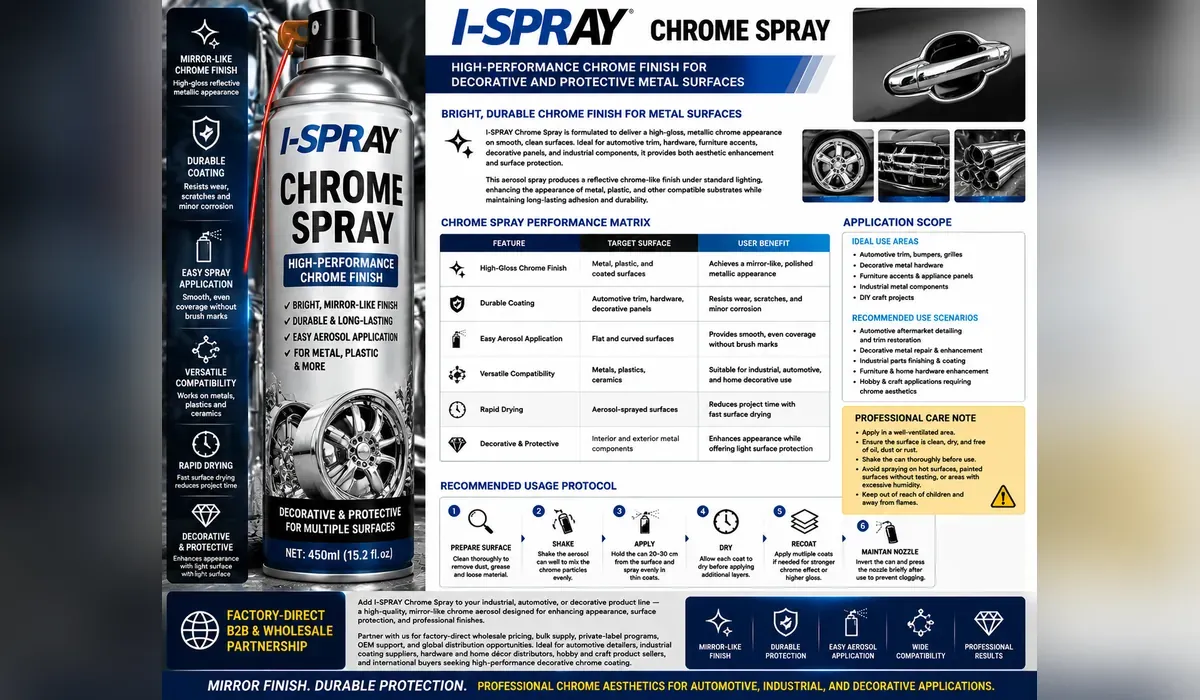
Road marking paint is intended for layout and identification. I-SPRAY Chrome Spray is a decorative finish, while galvanizing spray supports metal touch-up. Similar aerosol cans do not make the coatings interchangeable.
Use Huajie’s industrial maintenance aerosol guide to organize marking, coating, sealing, lubricating, and cleaning products by application.
Final recommendation
Select road marking paint through a site-specific trial. Define the substrate, traffic, line method, visibility, reopening time, and maintenance cycle; then compare usable coverage, application control, wear, documentation, and repeat supply.
For a project or distribution discussion, contact Huajie Chemical with your surface, layout, colors, applicator, destination market, quantity, and schedule.
FAQ
Can aerosol road marking paint be used in warehouses?
It can be considered for suitable warehouse lines, zones, symbols, touch-ups, and smaller layouts. Confirm substrate compatibility, ventilation, traffic, drying, and facility requirements through a site trial.
How do I estimate the number of cans?
Use a measured test line with the required width, film, surface texture, and number of passes. Include setup, overspray, touch-ups, and partly used cans.
When can traffic return to a painted line?
Follow the product instructions and validated site method. Touch-dry time is not necessarily the same as readiness for pedestrians, forklifts, or vehicles.
Should old markings be removed first?
It depends on the condition and compatibility of the existing coating. Remove loose or poorly bonded material and test for lifting, bleeding, adhesion, and appearance before full work.
What should a distributor confirm with the supplier?
Confirm substrates, application method, colors, drying guidance, documentation, package components, batch control, quality checks, sample approval, MOQ, lead time, and reorder availability.