Jul 28, 2026Buying Guides
PU Expanding Foam: Sourcing Guide for Distributors
Source PU expanding foam by defining the joint, substrate, application method, curing conditions, package, documentation, and distributor test plan.
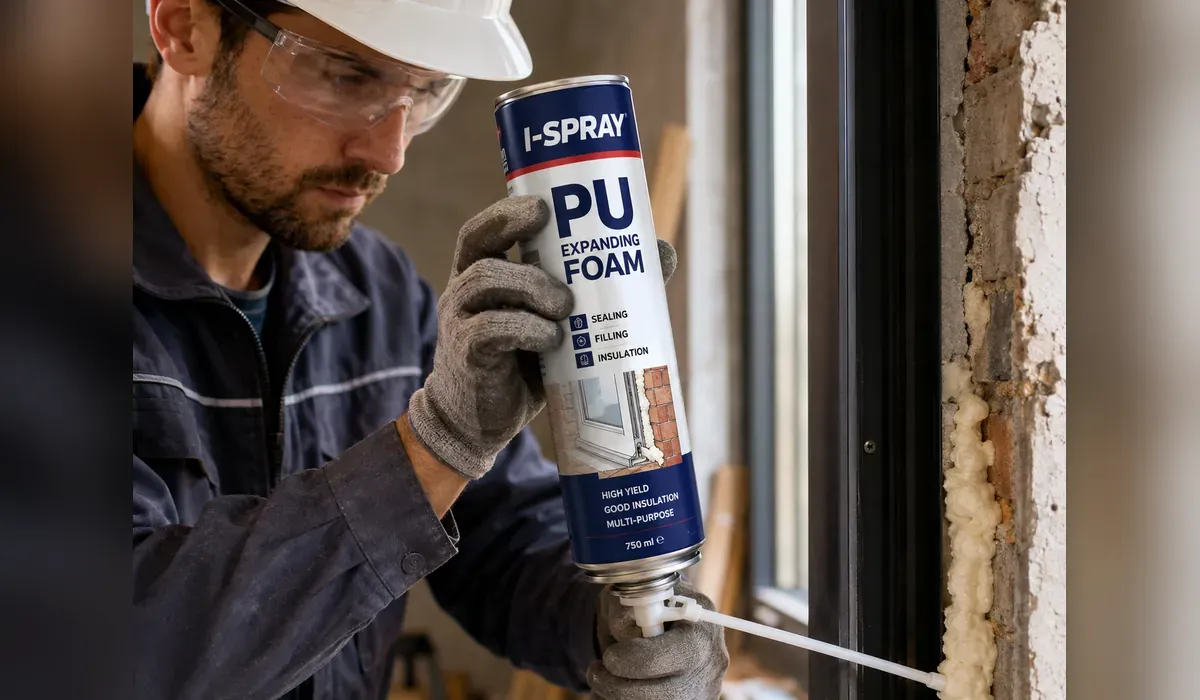
A PU expanding foam supplier should be evaluated against a specific filling, sealing, or installation job. Buyers need to define the joint, substrate, access, climate, application method, finishing steps, and destination-market requirements before comparing cans.
The useful commercial question is not “Which foam expands the most?” Excess expansion can create waste or distort an assembly. A distributor needs controllable delivery, suitable cured behavior, clear instructions, reliable packaging, and documentation that matches the product being sold.
Write an application brief before requesting samples
I-SPRAY PU Expanding Foam belongs to the seal, fill, and repair group within an industrial-maintenance range. To match a sample to the intended channel, describe:
- the opening, cavity, joint, or installation detail;
- approximate gap width and depth;
- horizontal, vertical, overhead, or enclosed access;
- concrete, masonry, wood, metal, plastic, or other surrounding materials;
- indoor or outdoor use;
- expected temperature and humidity during application;
- movement, vibration, moisture, or weather exposure after curing;
- required trimming, sanding, coating, plastering, or covering;
- manual straw or compatible gun application;
- installer experience and typical job size.
A window installer, hardware retailer, and industrial maintenance buyer may all purchase expanding foam, but their package and control priorities can differ.
Do not infer suitability from the product name
“PU foam” describes a broad family. Fire classification, acoustic performance, thermal properties, water resistance, yield, curing behavior, and substrate compatibility must be supported for the exact product and test conditions. If a project specification calls for a classified or certified product, request the relevant current evidence rather than assuming a general foam qualifies.
Compare control, not just expansion
Large visible expansion can look impressive in a demonstration. It does not show whether an installer can place the right amount cleanly.
During a trial, inspect:
- initial bead control;
- adhesion to the representative surfaces;
- sagging on vertical work;
- unwanted post-expansion;
- void filling and continuity;
- skin formation and later curing stages;
- trimming behavior;
- surface appearance after cutting;
- waste at the nozzle, straw, or gun;
- reuse behavior where the package instructions allow it.
Record application temperature, surface condition, bead size, cavity size, time points, and can mass before and after use. Without a consistent method, yield comparisons can be misleading.
Use representative joints
A free-standing foam mound does not represent a construction joint. Build simple test assemblies using the materials and gap dimensions found in the target market.
One set can examine a narrow perimeter gap; another can test a deeper cavity. Include vertical orientation if installers work on frames or wall openings. If surfaces are normally dampened or primed under the product instructions, control that step.
Understand curing and finishing
Buyers should distinguish between surface skin, tack-free condition, cuttable condition, and full cure. A single “drying time” may hide important differences.
Ask the supplier to define the stated times and conditions. Temperature, humidity, bead size, cavity depth, and access to moisture can change the process. Thick sections should not be judged only from the exterior.
If cured foam will be trimmed, painted, plastered, sealed, or covered, test the full finishing system. Outdoor exposure may require protection from sunlight or weather according to the instructions. Do not assume the exposed cured foam is the final exterior finish.
Avoid unsupported structural claims
Expanding foam can fill and seal space, but buyers should not present a general can as a structural fastening product unless the exact use is supported. Doors, windows, panels, pipes, and equipment may require mechanical fixing and project-specific methods.
Marketing copy should match the documented use. This protects installers and reduces distributor complaints caused by unrealistic expectations.
Package and applicator checks
The valve and delivery system have a direct effect on waste and user experience. Evaluate:
- straw or gun connection fit;
- valve leakage before and after use;
- bead control at low and higher flow;
- ability to reach the joint;
- can grip and inversion instructions;
- clogging after pauses;
- cap and accessory retention;
- carton protection during transport;
- batch coding and label legibility.
Where a gun-grade format is intended, test it with the compatible applicator used in the market. Where a straw format is intended for occasional users, instructions and control are especially important.
Build a fair yield comparison
Quoted “yield” can depend on the method, temperature, humidity, bead geometry, free expansion, and cured density. Ask each supplier how the number was measured.
For an internal comparison:
- condition cans and test materials consistently;
- weigh each can before use;
- apply foam into the same representative joint;
- follow the same moisture and timing procedure;
- record bead continuity and waste;
- inspect the cured section, not only external volume;
- weigh the can after use and document remaining material.
The most useful result is cost per acceptable installed joint, not maximum uncontrolled volume.
Documentation and destination-market review
Request the current safety data sheet, technical or product specification, application instructions, storage information, transport classification, shelf-life statement, batch traceability, and evidence for any performance claims.
For regulated construction uses, classification and labeling can depend on the destination market and exact product. Buyers should identify the country, channel, and intended claim before artwork approval. A document for a different formula or can configuration should not be treated as automatic coverage.
Pressurized reactive products require appropriate transport, storage, ventilation, PPE, training, and disposal controls. Distributor instructions should remain readable and practical, not be reduced to promotional slogans.
Private-label sourcing checklist
Align the commercial program with the approved sample:
- formula and intended application scope;
- can size and fill quantity;
- straw, gun adapter, valve, cap, and carton;
- label languages, directions, warnings, and symbols;
- artwork review and destination-market responsibility;
- sample, pilot, and retention process;
- filling, leakage, valve, appearance, and packaging checks;
- batch code and complaint-investigation procedure;
- storage and shipping configuration;
- MOQ, lead time, and reorder plan for the agreed components.
Changing an applicator or valve after sample approval can change the way the foam is delivered. Include package components in change control.
Range positioning for distributors
Place expanding foam under a clear construction, hardware, installation, or maintenance use rather than among unrelated aerosol lubricants. In a wider MRO portfolio, distinguish it from road marking paint, protective coatings, and cleaners.
Huajie’s industrial maintenance aerosol guide can help buyers organize products by job instead of by can appearance.
Final recommendation
Choose a PU expanding foam supplier through representative joint testing. Compare application control, cured behavior, finishing compatibility, package reliability, documents, and cost per acceptable installation. Treat headline expansion and yield as test-dependent claims.
To request samples, contact Huajie Chemical with the joint details, substrates, application method, market, packaging preference, and expected volume.
FAQ
What information should I send a PU expanding foam supplier?
Provide the joint dimensions, substrates, orientation, indoor or outdoor use, application conditions, finishing steps, applicator type, destination market, and expected order volume.
Is higher expansion always better?
No. The right expansion should fill the intended space without excessive waste or pressure on the assembly. Test control and cured quality in representative joints.
How should distributors compare yield?
Use the same conditioned cans, materials, joints, application procedure, curing conditions, and inspection method. Compare acceptable installed work and waste, not only free-expanded volume.
Can cured foam remain exposed outdoors?
Follow the exact product instructions. Outdoor work may require a suitable protective finish. Do not assume general cured foam is a complete exterior weather surface.
What documents should a buyer request?
Request the current SDS, product specification, application instructions, storage and transport information, batch traceability, and evidence supporting any project-critical claim.