Jul 28, 2026Buying Guides
Glass Anti-Mist Spray: Windshield Anti-Fog Product Guide
Evaluate glass anti-mist spray for windshield use by clarity, haze, application method, surface compatibility, packaging, and distributor testing.
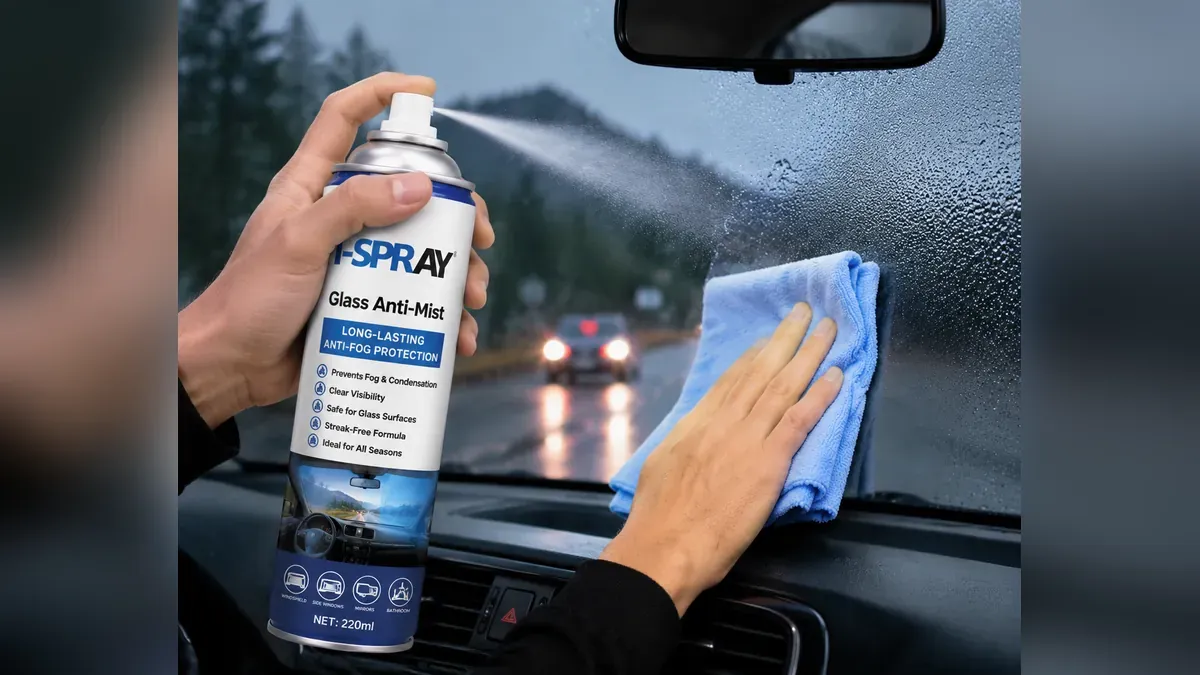
Glass anti-mist spray is intended to reduce fogging on approved interior glass surfaces. Buyers should judge it by clear vision, not by the amount of product left on the glass.
The product needs to spread evenly, dry or buff without distracting haze, and perform under realistic humidity and temperature changes. It must also come with instructions that tell the user how much to apply, how to prepare the glass, and where not to use it.
This guide covers the checks automotive distributors and private-label buyers should complete before approving an anti-fog product.
Why automotive glass fogs
Fog forms when moisture condenses on a cooler glass surface. In a vehicle, the difference between cabin humidity, occupant breath, outside temperature, and glass temperature can quickly reduce visibility.
Ventilation, air conditioning, demisting controls, and clean glass remain part of safe driving. An anti-mist treatment is an additional surface-care product, not a replacement for the vehicle's visibility systems or proper driver action.
The label should avoid implying that a coating can prevent every visibility problem in every condition.
Define the approved glass surfaces
Buyers should confirm whether the supplied product is intended for the interior of automotive windshields, side windows, mirrors, or other approved glass surfaces. Coated glass, tinted films, displays, instrument covers, camera areas, and optical plastics may require separate compatibility review.
Do not assume that "glass" includes every transparent surface in a modern vehicle.
Preparation affects the result
Oil film, smoke residue, fingerprints, dust, and previous cleaning products can cause streaks or uneven treatment. The sample test should start with a defined cleaning method and fully dry glass.
I-SPRAY Multi-Purpose Glass Cleaner is a related cleaning product, but buyers must confirm that the preparation cleaner and anti-mist treatment are compatible when used in sequence.
Record the cloth type, cleaning steps, drying time, amount applied, and buffing method. Otherwise, two testers can get different results from the same product.
Test clarity before anti-fog performance
An anti-mist product that leaves visible haze, rainbowing, smears, or headlight glare is not acceptable simply because it reduces condensation.
Inspect the treated glass:
- in daylight;
- against a dark background;
- under streetlight or headlight-like illumination;
- from the driver's viewing angle;
- immediately after application and after the product has settled;
- after light touching or cleaning where relevant.
Use an untreated control area. The comparison should show whether the treatment itself changes optical clarity.
Run a controlled fogging comparison
A useful test keeps glass type, cleaning, treatment amount, temperature, humidity, and observation time consistent.
- Prepare identical glass panels.
- Clean and dry them using the same method.
- Treat one panel according to the instructions and keep one untreated.
- Expose both to the same controlled fogging condition.
- Record time to visible fog, coverage, droplet pattern, and clarity.
- Repeat after the treatment has aged for defined intervals.
- Check whether reapplication or cleaning changes the result.
- Repeat with several product samples.
Avoid dramatic demonstrations that expose two panels to different conditions. A comparison only helps the buyer when the test is repeatable.
Application method and packaging
Some users prefer spraying onto a cloth to control overspray; others expect direct application. The correct method must come from the supplied product instructions.
Test the actuator for a fine, controllable output. Large droplets can make even spreading difficult. Review can grip, cap retention, leakage, nozzle protection, and whether the instructions are readable on the selected package.
Overspray near dashboards, displays, cameras, sensors, upholstery, or trim should be addressed in the label. If the product is sold in a kit, specify the cloth and cleaning sequence rather than assuming any cloth will work.
Distributor positioning
Anti-mist spray belongs in a visibility-care group with glass cleaner, but the two jobs should remain separate.
- Glass cleaner removes approved dirt and film.
- Anti-mist treatment manages condensation behavior on approved prepared glass.
Putting both jobs into one vague description can leave customers unsure whether they should clean, treat, or repeat both steps.
For a broader winter or wet-weather range, the distributor can position anti-mist beside maintenance products without claiming that it replaces vehicle demisters, wipers, or safe driving practices.
Supplier and private-label questions
Ask the supplier:
- Which glass surfaces and coatings are approved?
- Is the product intended for interior glass, exterior glass, or both?
- What cleaning and preparation method was used in testing?
- What clarity, haze, and fogging comparisons support the claim?
- How should the product be applied and buffed?
- Which adjacent vehicle materials and optical surfaces are excluded?
- How are fill weight, spray output, leakage, and batch consistency checked?
- What safety, transport, label, and packaging documents are available?
Private-label artwork should show a realistic use and avoid an impossible promise such as "never fogs."
Final recommendation
Choose glass anti-mist spray by testing both visibility and condensation control. Start with clean glass, use a controlled application, inspect haze under several lighting conditions, and compare treated and untreated panels under the same fogging test.
To discuss samples or private-label glass care, contact Huajie Chemical with the target glass surfaces, sales channel, destination market, package preference, and testing requirements.
FAQ
Does anti-mist spray replace the vehicle demister?
No. It is a surface treatment for approved glass. Drivers should still use the vehicle's ventilation, air conditioning, and demisting systems and respond safely to reduced visibility.
Can it be used on tinted windows?
Do not assume compatibility. Confirm whether the exact tint film or coated surface is approved and test according to the supplier's guidance.
Should the product be sprayed directly on the windshield?
Follow the instructions for the supplied product. A controlled cloth application may reduce overspray in some cases, but the approved method must be stated on the label.
What should a buyer inspect after application?
Inspect haze, streaks, rainbowing, glare, uniformity, surface feel, and the anti-fog result under controlled conditions.
Is glass cleaner the same as anti-mist spray?
No. Glass cleaner removes contamination. Anti-mist treatment changes how condensation forms on prepared approved glass.