Jul 28, 2026Buying Guides
Dashboard Wax: Automotive Interior Care Selection Guide
Evaluate dashboard wax by finish, glare, material compatibility, application control, residue, packaging, and private-label B2B sample testing.
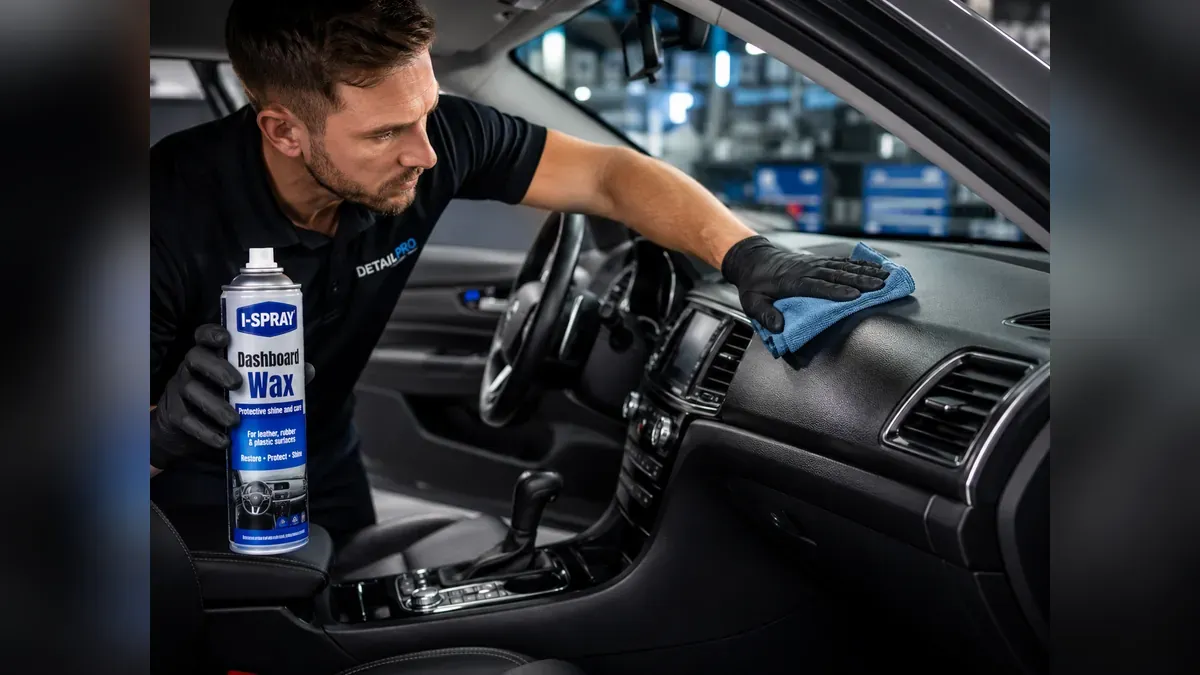
Dashboard wax is an interior appearance and surface-care product for approved materials. Buyers should assess the finish from the driver's seat, not only from a close-up product photograph.
Too much gloss can create distracting reflections on the windshield. Uneven application can leave streaks around textured plastics, controls, and vents. A product that feels greasy may also attract dust or transfer to hands and clothing.
For distributors and private-label brands, the right dashboard wax gives a controlled, repeatable finish on the materials listed in its instructions.
Define the target finish
Huajie's I-SPRAY Dashboard Wax is positioned for care of approved automotive leather, rubber, and plastic surfaces.
Before sample testing, define whether the range needs a natural, satin, or visibly glossy appearance. Do not ask the supplier for "premium shine" without a reference. Different markets and vehicle owners have different preferences.
Create approved visual samples on representative trim. Photograph them under consistent lighting and view them from normal seating positions. This gives production and sales teams something more precise than a subjective note.
Modern interiors contain many materials
A dashboard may include textured plastic, soft-touch coatings, synthetic upholstery, leather, rubber seals, glossy trim, painted parts, screens, transparent instrument covers, buttons, sensors, and fabric.
The product should only be used on confirmed materials. Screens, steering wheels, pedals, control surfaces, clear instrument lenses, and areas where a slippery finish is undesirable may need to be excluded.
Do not allow a broad "for all interiors" claim unless the supplied product has evidence for that scope. A short hidden-area test is useful, but it does not approve every material.
Preparation and application
Dust and existing oily film can cause streaks. The instructions should explain how the surface should be cleaned and dried before treatment.
I-SPRAY All Purpose Foam Cleaner is positioned for automotive interiors and washable materials. If it is used as a preparation product, test the cleaner and dashboard wax as a sequence on the approved trim.
Direct spraying can create overspray on glass, displays, and controls. A cloth application may provide better control for some products, but the correct method must match the supplied instructions.
Record product amount, cloth type, spreading passes, buffing, and settling time during sample approval.
Check glare and optical distraction
The treated dashboard should be inspected through the windshield in daylight and under strong directional light. Compare treated and untreated areas from the driver's position.
Look for:
- windshield reflection;
- uneven gloss on textured trim;
- glare around instrument areas;
- haze from overspray on glass or clear surfaces;
- visible streaks after the product settles;
- transfer to the cloth, hands, or adjacent surfaces.
A glossy sample may photograph well and still be unsuitable for the upper dashboard. Product positioning can distinguish between low-glare dashboard areas and decorative trim where a stronger shine is acceptable.
Surface feel and dust attraction
Inspect the surface after application and again after it has settled. Record tackiness, oiliness, fingerprints, and dust pickup using a consistent method.
Do not claim long-term dust resistance without a defined test. Interior conditions vary with temperature, ventilation, smoking, road dust, and cleaning habits.
If a treated surface transfers product to hands or clothing, review application amount and buffing instructions before approving the formula or claim.
A practical sample comparison
Use representative interior panels.
- Photograph and label each material.
- Clean and dry all panels using the same method.
- Apply a measured amount of product.
- Spread and buff according to the instructions.
- Inspect color change, gloss, streaking, and texture.
- View upper-dashboard panels through glass under strong light.
- Check surface feel, transfer, and dust pickup after settling.
- Repeat with several cans and users.
Include an untreated control and a target-finish reference. Different users often apply very different quantities, so the instruction test is as important as the formula test.
Packaging for detailing and retail
Review can size, grip, actuator control, cap, batch code, label, and carton. The spray should be easy to direct onto the chosen applicator without unnecessary mist.
The label should name approved surfaces and excluded areas. It should also describe preparation, amount, spreading, buffing, and precautions in an order that a first-time user can follow.
For private-label supply, confirm artwork, language, barcode, carton, actuator, cap, and any applicator included in the kit. Changes to the actuator can change the amount delivered, so retest the final package.
Supplier questions
Ask the supplier:
- Which leather, rubber, plastic, and coated surfaces are approved?
- Which screens, controls, transparent parts, or high-grip areas are excluded?
- What finish level is the formula designed to produce?
- Should it be sprayed directly or applied with a cloth?
- What tests support appearance, compatibility, and surface-feel claims?
- How are fill weight, spray output, leakage, and batch consistency checked?
- What safety, transport, label, and packaging documents are available?
- Which private-label components can be changed without altering application performance?
Use answers tied to the exact sample rather than a generic product brochure.
Final recommendation
Choose dashboard wax by the finish seen from inside the vehicle. Test glare, streaking, surface feel, dust pickup, material compatibility, and overspray on representative trim.
To discuss samples or a private-label interior-care range, contact Huajie Chemical with the target materials, desired finish, sales channel, destination market, and packaging brief.
FAQ
Can dashboard wax be used on every interior surface?
No. Confirm the approved materials. Screens, clear instrument covers, steering wheels, pedals, controls, and other sensitive or high-grip areas may be excluded.
Is a high-gloss finish always better?
No. Strong gloss on an upper dashboard can create windshield reflections. The preferred finish depends on the surface and market.
Should dashboard wax be sprayed directly?
Follow the supplied instructions. Applying through a cloth can reduce overspray for some products, but the approved method must be tested.
What should private-label buyers compare?
Compare finish, glare, streaks, feel, dust pickup, overspray, material compatibility, actuator control, packaging, and results across several users and cans.
Can an interior foam cleaner be used first?
It may be part of the preparation routine if both products are approved for the surface and tested in sequence. Make sure the panel is clean and dry before applying the finish product.