Jul 28, 2026Buying Guides
Car Sticker Remover: Safe Adhesive Removal Buyer Guide
A buyer guide to car sticker remover covering adhesive types, painted-surface checks, controlled dwell, residue, packaging, and sample approval.
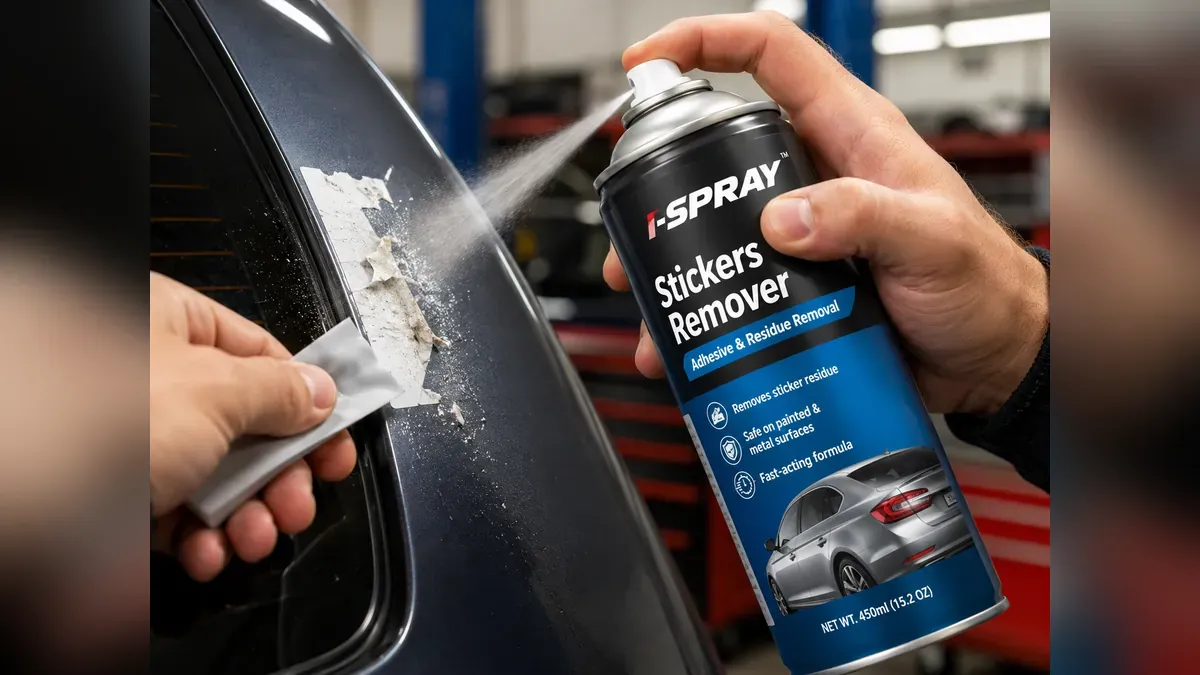
A car sticker remover should loosen a defined adhesive without damaging the approved surface underneath. That sounds simple until the buyer considers the variety of labels, tapes, decals, paint systems, plastics, rubber, and previous repairs found on vehicles.
The right purchasing question is not "How strong is it?" It is "Which adhesive can it remove from which surface, using what dwell and wiping method?"
This guide explains how automotive distributors and detailing suppliers can test sticker remover before approving a product or private-label claim.
Start with the adhesive and surface
Huajie's I-SPRAY Stickers Remover is positioned for adhesive and residue removal from approved metal, painted, and rubber surfaces.
Buyers should turn that broad description into a test matrix. Include the materials and adhesive residues common in the target channel:
- paper labels and price stickers;
- vinyl decals;
- tape residue;
- bumper-sticker adhesive;
- protective-film residue;
- old adhesive affected by heat and weather;
- painted metal, bare approved metal, glass, plastic trim, and rubber where applicable.
Do not assume one result covers every decal or surface. Adhesives change as they age, and refinished paint can behave differently from a factory finish.
Remove the top layer before treating residue
Sticker removal often has two stages. The user first removes the paper, vinyl, or film, then treats the adhesive left behind.
The label should explain whether the product is intended for the intact sticker, remaining residue, or both. If mechanical lifting is required, specify tools or methods that do not scratch the approved surface.
Applying more chemical product than necessary can increase runoff and compatibility risk. Test the minimum effective amount and dwell rather than approving a "spray heavily" instruction.
Surface compatibility comes first
Paint appearance should be checked before and after treatment. Look for softening, dulling, color transfer, swelling, staining, or a change in gloss. Inspect again after the surface has dried.
Include repaired and older finishes if those vehicles matter to the sales channel. A small hidden-area test should be recommended where appropriate, but it does not make every surface safe.
Modern vehicles also have plastic emblems, clear coatings, rubber seals, printed markings, films, and sensor areas. Ask for exclusions and accidental-contact guidance.
Never scrape or rub aggressively during a product comparison. Excessive mechanical action can make a weak cleaner look effective while damaging the panel.
A controlled adhesive-removal test
Prepare panels with known adhesive materials.
- Record the substrate and finish.
- Apply the label, tape, or adhesive using a consistent method.
- Age the samples for a defined period if relevant.
- Remove the top layer in the same way.
- Apply a measured amount of remover.
- Record dwell time, wiping passes, and cloth type.
- Inspect remaining adhesive and surface appearance.
- Check for oily film or cleaner residue after drying.
- Repeat across several samples and cans.
Use an untreated comparison and, if useful, a mechanical-only cleaning control. This shows what the chemical product actually contributes.
Spray control and residue
A sticker remover is often applied to a small area. The actuator should deliver controlled coverage rather than a wide cloud of overspray.
Test vertical surfaces for running and the risk of product reaching trim or gaps below the target. An extension tube may improve precision, but only if it stays attached and produces a consistent output.
After adhesive removal, determine how the treated surface should be cleaned. A product that leaves an oily film may affect later polishing, painting, or application of a new decal. The final instructions should include the approved finishing step.
Sticker residue and road tar are different jobs
I-SPRAY Pitch Cleaner & Polish is positioned for pitch and asphalt contamination. Sticker remover is positioned for adhesive residue.
Some contamination may look similar on a dirty panel, but the buyer should not collapse these products into one claim without test evidence. Separate naming helps detailers choose the correct treatment and gives each product page a clear search purpose.
If a distributor carries both, staff training can start by identifying the contaminant before selecting the can.
Packaging and document review
Inspect can size, actuator, cap, optional extension tube, label, batch code, and carton. Check leakage and output after storage and repeated use.
Request the current specification, safety data sheet, transport information, application instructions, approved and excluded materials, and packaging details.
For private-label artwork, avoid photographs or statements that imply safe use on every painted or plastic surface. Claims should match the tested substrates and supplied formula.
Questions to ask a supplier
Ask for written answers:
- Which adhesive types were used in testing?
- Which vehicle materials and finishes are approved?
- Which surfaces, films, coatings, or repairs are excluded?
- What dwell time and wiping method apply?
- How should remaining cleaner residue be removed?
- What spray pattern or extension-tube options are available?
- How are fill weight, valve output, leakage, and batch consistency checked?
- What label, safety, transport, and private-label documents are supplied?
Keep the approved adhesive panels where practical. They provide a useful reference if a later shipment behaves differently.
Final recommendation
Choose car sticker remover by matching a known adhesive to a tested surface. Use controlled dwell and wiping, inspect the finish after drying, and make the exclusions clear on the label.
To discuss samples or private-label adhesive remover, contact Huajie Chemical with the target stickers, vehicle surfaces, sales channel, destination market, and preferred packaging.
FAQ
Can sticker remover be used on all automotive paint?
No. Paint systems, repairs, age, and condition vary. Confirm the approved surfaces and test a small hidden area according to the instructions.
Does it remove the sticker or only the residue?
That depends on the product and sticker. Many jobs require the top layer to be lifted first and the remaining adhesive to be treated separately.
How long should the product dwell?
Follow the instructions for the exact supplied product. Longer dwell is not automatically better and may increase surface risk.
Is sticker remover the same as tar remover?
No. Adhesive residue and road tar are different contaminants. Use a product whose tested scope matches the material being removed.
What should distributors include in sample testing?
Test several adhesives on representative painted, metal, rubber, glass, or plastic surfaces within the proposed scope. Record dwell, wiping, residue, and surface changes.