Jul 23, 2026Buying Guides
Private Label Aerosol Cleaner Sourcing Guide
Learn how retailers can source private label aerosol cleaners by use case, formula, spray system, packaging, compliance, testing, and supply fit.
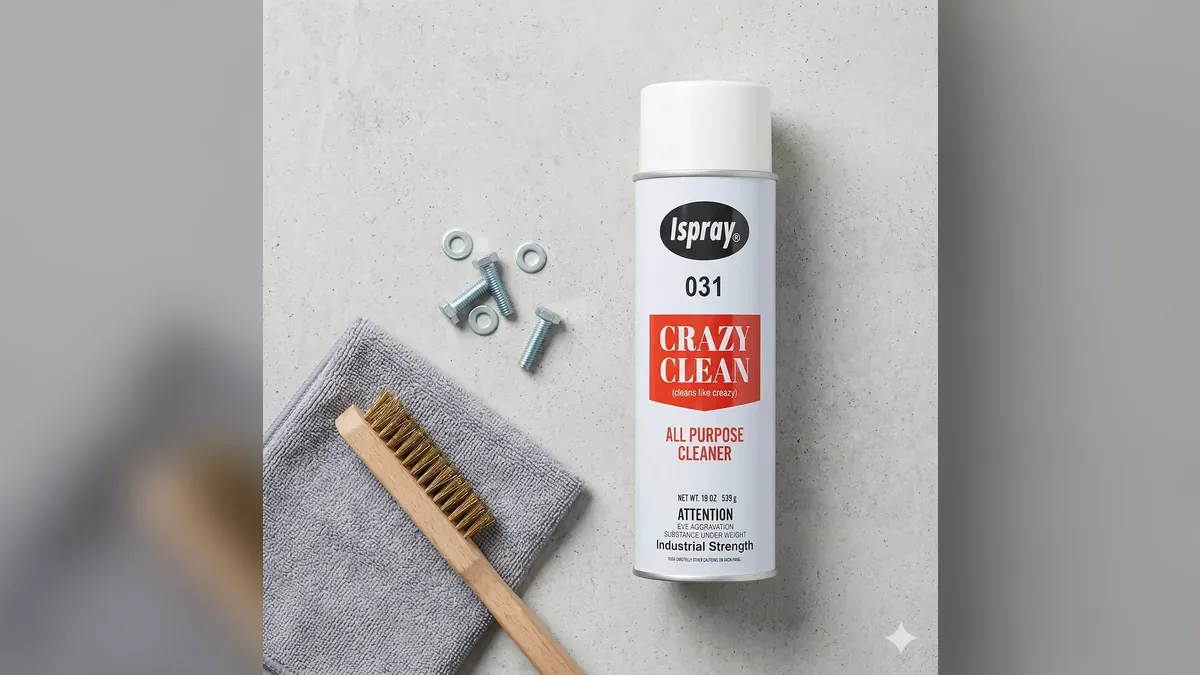
Choosing a private label aerosol cleaner manufacturer starts with the cleaning job, not the fragrance or can design. The finished product must work on the intended soil and surface, remain stable in its package, spray consistently, and carry claims that the supplier can document.
A long range can look impressive in a catalog and move slowly on the shelf when several products do the same job. Retailers usually get a cleaner launch from a smaller range with obvious applications.
The sections below turn a general request for “household cleaning aerosols” into a brief a manufacturer can test and quote.
Build the range around cleaning jobs
Start with the consumer or professional task rather than the chemical formula. Each SKU should answer a simple question: what surface or problem is this product designed to handle?
A starter range might include:
- glass and reflective surfaces: windows, mirrors, glass doors, display cases, and approved automotive glass;
- kitchen grease: grills, ovens, cooktops, and hard kitchen surfaces;
- metal care: stainless-steel appliances, fixtures, and other approved metal surfaces;
- stone care: marble and compatible natural stone;
- odor control: air fresheners and shoe deodorizers;
- special-purpose products: anti-static spray, insect-control products, expanding foam, or other locally relevant categories.
Huajie's Premium Household category contains products across these jobs. The range includes JJW-826 Multi-Purpose Glass Cleaner, JJW-824 Grill and Oven Cleaner, JJW-848 Stainless Steel Polishing Cleaner, JJW-702 Marble Cleaner, air treatment products, and other aerosol solutions.
Do not give every item the same performance message. “Streak-free,” “degreasing,” “polishing,” and “odor control” set different expectations and need different tests.
Define the target channel before requesting samples
The same product concept may need a different specification for a supermarket, professional cleaning distributor, e-commerce seller, hotel-supply channel, or home-improvement retailer.
Clarify:
- target country and sales channel;
- retail or professional use;
- expected can size and price position;
- preferred fragrance or low-odor direction;
- languages and mandatory label content;
- carton and shelf-display requirements;
- environmental or ingredient policies of the retailer;
- forecast volume and launch schedule.
These details affect the formula, artwork, claims, package, documents, and price. Without them, a supplier may send attractive samples that cannot be used for the final retail program.
Evaluate cleaning performance on the real surface
One demonstration panel is not enough. Test each SKU with the real soil, surface, and cleaning method.
For example, JJW-826 Multi-Purpose Glass Cleaner is positioned for windows, mirrors, glass doors, display cabinets, office partitions, and other reflective surfaces. A buyer's test should review:
- removal of fingerprints, light grease, and everyday soil;
- streaking under different lighting;
- wiping effort with the intended cloth or tissue;
- residue and clarity after drying;
- spray coverage and overspray;
- performance on the approved types of glass.
JJW-824 Grill and Oven Cleaner has a different job: loosening grease and baked-on residue on grills, ovens, cooktops, and kitchen surfaces. Its test should use defined greasy soil, a cool surface, a controlled dwell time, a specified wiping or scrubbing method, and a complete rinse or wipe-down procedure.
Record the method. If a sample works only when the supplier's technician uses an undocumented technique, the brand will struggle to reproduce the result or investigate complaints.
Check the user experience as carefully as cleaning strength
Consumers notice the actuator, odor, runoff, and residue as much as the cleaning result. A strong formula can still earn poor reviews if the valve leaks or the foam slides off a vertical surface.
Review:
- actuator force and comfort;
- spray width, droplet size, or foam density;
- coverage on horizontal and vertical surfaces;
- product runoff and overspray;
- fragrance intensity during and after cleaning;
- visible residue, haze, or tackiness;
- cap fit and resistance to accidental discharge;
- nozzle clogging after repeated use;
- can appearance after storage and transport.
Set separate acceptance criteria for glass mist, oven foam, polish, and air-treatment spray. One valve and actuator combination will not suit every formula.
Validate formula-to-package compatibility
An aerosol package includes the formula, propellant, can, internal coating where used, valve, gasket, actuator, cap, filling process, and carton. A change to one component may affect leakage, corrosion, spray output, or shelf life.
Ask how the exact combination is tested. The approval file should identify the components, not just the artwork and nominal fill size.
Key checks can include:
- can and valve compatibility with the formula;
- leakage and pressure behavior under the agreed test conditions;
- internal and external corrosion review;
- fill-weight and discharge consistency;
- spray or foam performance over product life;
- storage orientation and temperature conditions;
- cap, label, printing, and carton durability.
The required protocol depends on the product and market. Agree on the method and acceptance criteria before mass production.
Treat claims and labels as controlled information
Claims such as “disinfects,” “kills insects,” “food safe,” “non-toxic,” “eco-friendly,” “antibacterial,” and “safe on all surfaces” may require specific evidence or registration. The rules depend on the country and product type.
Private-label buyers should approve claims through a documented process:
- define the exact wording;
- identify the test or legal basis;
- confirm the countries and channels where it will be used;
- check warnings, directions, ingredients, and transport information;
- keep the supporting report linked to the final SKU and formula version.
Do not copy claims from a similar formula or another market. A reasonable-sounding sentence can still create a regulatory or customer-service problem when the final SKU has no supporting evidence.
Ask for a complete B2B document package
Before shipment, the buyer may need:
- product specification;
- safety data sheet;
- label and artwork approval record;
- packing list and carton specification;
- batch or lot identification;
- transport classification and required shipping documents;
- relevant test reports or declarations;
- inspection criteria for filling, leakage, appearance, and spray output;
- change-control contact and procedure.
The list changes with the formula and destination. Agree early on what the brand owner, importer, and manufacturer will each provide.
Use a staged development process
A private-label project is easier to manage in stages.
1. Commercial brief
Define the product job, target customer, market, packaging, expected volume, price position, and launch date.
2. Sample shortlist
Compare a small number of relevant formulas instead of requesting a large unsorted sample box.
3. Application testing
Test performance, substrate compatibility, spray behavior, odor, residue, and user instructions.
4. Package and artwork confirmation
Approve the complete can, valve, actuator, cap, fill, printing or label, carton, and barcode specification.
5. Documentation review
Confirm claims, warnings, SDS, transport information, test scope, and market requirements.
6. Pilot or pre-production approval
Inspect representative finished units and record the approved standard before the main run.
7. Mass-production and reorder control
Use batch traceability, release checks, retained samples where appropriate, and a clear process for changes or complaints.
Supplier questions that improve the quotation
Send the manufacturer a structured request:
- Which ready-made formulas match our defined cleaning jobs?
- Which elements can be customized without reformulation?
- What can sizes, valves, actuators, caps, and decoration methods are available?
- What tests support performance and compatibility?
- Which market documents are included, and which require separate testing?
- What are the MOQ, sample cost, lead time, carton quantity, and payment terms?
- How are leakage, fill weight, spray output, and appearance checked?
- What happens if a component or formula must change after approval?
A structured request produces a useful quotation. A request for the lowest price per can usually leaves out the components, testing, and documents that determine the real cost.
Final recommendation
Choose a manufacturer that can turn the cleaning job into a repeatable specification. Review the formula and package, user experience, claims, documents, production checks, and commercial terms before approval.
To request a focused sample set from Huajie Chemical, send the target country, sales channel, cleaning jobs, package concept, and estimated volume.
FAQ
What household aerosol products can be private labeled?
The available range may include glass cleaner, grill and oven cleaner, stainless-steel cleaner and polish, stone cleaner, air freshener, shoe deodorizer, anti-static spray, and other specialty products. Confirm the current catalog and target-market suitability with the supplier.
Can I use my own can design and brand?
Private-label packaging may be available. The manufacturer must confirm artwork method, can size, valve and cap options, carton requirements, MOQ, and compatibility with the selected formula.
How should I compare aerosol cleaner samples?
Use defined soil and real substrates. Record dosage, dwell time, wiping method, cleaning result, residue, odor, spray behavior, and any material change. Test multiple units rather than one demonstration can.
What is the MOQ for a private-label aerosol cleaner?
MOQ depends on the formula, packaging, decoration, component availability, and production setup. Request a written quotation for the exact configuration rather than relying on a general MOQ.
Which certifications are required?
Requirements depend on the product type, claims, destination country, and sales channel. Ask for product-specific documents and have the importer or a qualified compliance adviser confirm local obligations.