Jul 23, 2026Buying Guides
Airsoft Green Gas Sourcing Guide for B2B Buyers
Learn what B2B buyers should verify when sourcing airsoft green gas: compatibility, valve performance, packaging, safety, shipping, and private label supply.
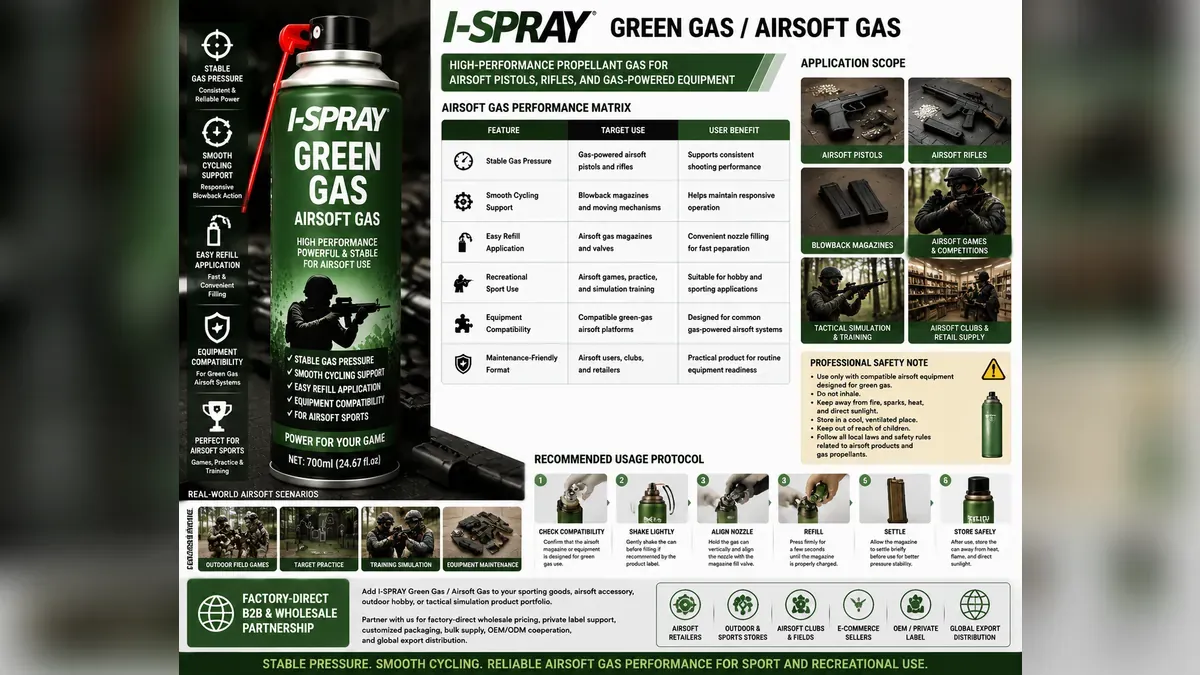
Price and printed can size are only two inputs when choosing an airsoft green gas supplier. The gas, can, valve, nozzle, seals, fill control, label, carton, storage limits, and transport documents all affect whether the product can be sold reliably.
One good sample proves very little. Returns can still follow if production valves leak, nozzles fit poorly, cans corrode, or the importer lacks the documents needed for the chosen shipping route.
The checks below are intended for airsoft shops, e-commerce sellers, clubs, fields, and private-label brands reviewing a green-gas program.
Define the equipment and customer segment
Start with the products your customers already use. The green-gas brief should identify:
- intended airsoft pistol, rifle, or magazine categories;
- common fill-valve interfaces in the target channel;
- recreational, field, club, training, or retail use;
- climate and storage conditions in the target market;
- preferred can size and retail price position;
- expected usage instructions and warnings;
- distribution through physical retail, e-commerce, clubs, or fields;
- target countries and import route.
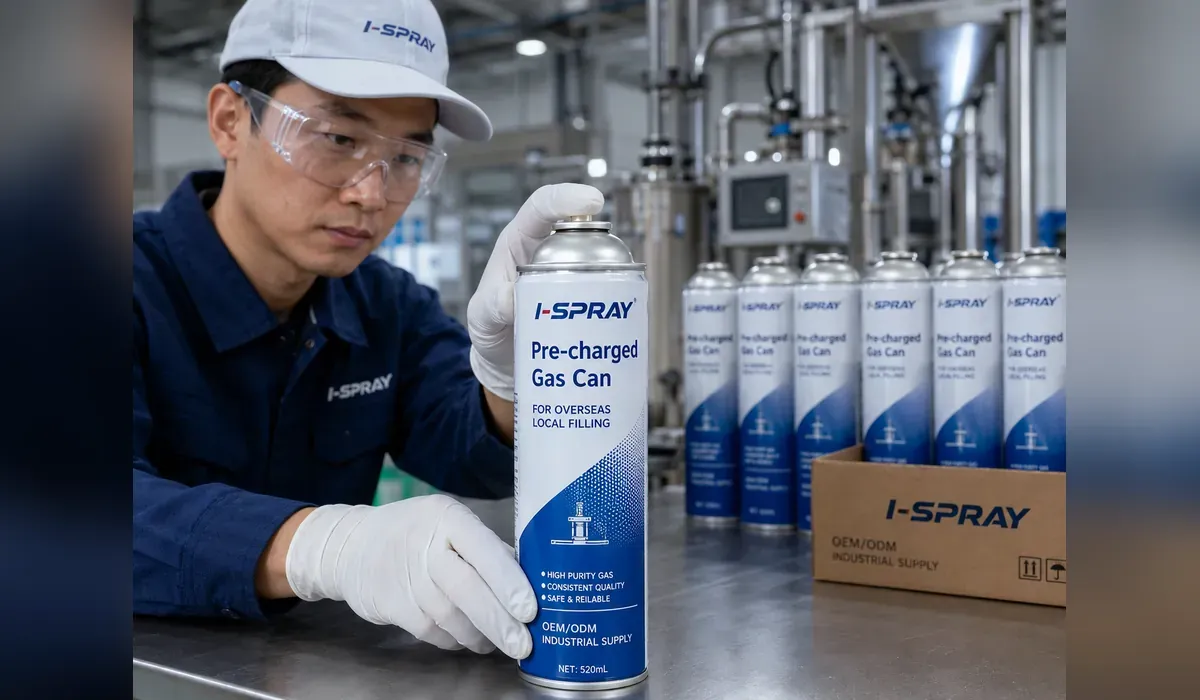
Huajie's Specialty Aerosol category currently features I-SPRAY Green Gas / Airsoft Gas, positioned for airsoft pistols, rifles, field games, target practice, clubs, sporting-goods retailers, hobby shops, e-commerce sellers, and private-label distribution.
Use the stated scope to select samples, then test them with representative equipment from the target market.
Treat compatibility as a system test
The can nozzle and magazine fill valve need a reliable seal. Poor alignment or dimensional variation causes leakage, wasted gas, cold surfaces, and avoidable returns.
During sample evaluation, review:
- nozzle dimensions and fit with representative fill valves;
- ease of alignment and consistent transfer;
- leakage at the can valve and fill interface;
- valve recovery after repeated use;
- damage or deformation around the nozzle;
- cap retention during transport;
- can handling and label durability;
- clear instructions for compatible equipment.
Test several cans across several representative magazines. A single successful fill says nothing about consistency across a production run.
Ask for a product specification with test conditions
Terms such as “high pressure,” “stable pressure,” and “all-season” need test conditions and equipment context before they mean anything useful.
Request a written specification that identifies the product, formulation or grade, nominal fill, package components, storage limits, usage conditions, and quality checks. If the supplier provides pressure or performance data, ask for:
- the test temperature;
- the test method and equipment;
- sample size and production batch;
- the measured value and acceptable range;
- the intended compatibility scope;
- how performance changes across the allowed temperature range.
Do not select a product because it has the largest pressure number. Some equipment cannot tolerate higher pressure or a particular gas. Follow the equipment manufacturer's guidance and the final product label.
Review valve, can, and filling consistency
The can must remain compatible with the gas and deliver a controlled fill throughout its usable life.
Ask the supplier how it checks:
- incoming cans, valves, gaskets, nozzles, and caps;
- crimping and seal integrity;
- leakage after filling;
- fill quantity or fill weight;
- valve output and repeated operation;
- can corrosion and package compatibility;
- batch identification and traceability;
- finished-can appearance and carton protection.
Tie these checks to approved component codes. A substituted valve or gasket can change transfer and leakage even when the artwork and gas formula stay the same.
Test under the target market's conditions
Temperature affects gas behavior and the filling experience. Warehouses, delivery vehicles, outdoor fields, and retail shelves may expose the same product to very different conditions.
Agree on a controlled evaluation plan with the supplier and qualified technical staff. Include:
- storage and conditioning at the agreed temperatures;
- leakage and can-condition checks;
- transfer performance with representative magazines;
- valve operation after repeated use;
- consistency across multiple cans and batches;
- label adhesion and carton condition;
- review of storage and transport limits.
Do not heat, puncture, burn, or deliberately misuse cans during testing. Use trained personnel and controlled procedures. Follow the label and safety data sheet for storage away from heat, flame, and direct sunlight.
Confirm safety, legal, and transport responsibilities
Green gas is a pressurized product. Dangerous-goods transport, aerosol labeling, storage, e-commerce, carrier, and local airsoft rules may apply, depending on the formula, can size, country, and transport mode.
Before ordering, confirm:
- current safety data sheet for the final product;
- transport classification and shipping name where applicable;
- carton marks, labels, and packaging required by the selected route;
- storage instructions and temperature limits;
- product warnings and disposal information;
- language and importer details required on the label;
- carrier acceptance for sea, road, rail, or air transport as relevant;
- local restrictions affecting airsoft products and propellant-gas sales;
- responsibility of the manufacturer, exporter, importer, and brand owner.
A document accepted for one country, carrier, or formula may not cover another. Review the final shipment plan before production begins.
Design a private-label package that reduces mistakes
The package should make the product easy to identify and use correctly. Include:
- product name and clear intended use;
- compatible equipment statement based on verified scope;
- fill quantity and can dimensions;
- nozzle and cap specification;
- instructions and safety warnings;
- storage and disposal information;
- batch or date coding;
- importer, distributor, and contact details where required;
- barcode, carton quantity, and e-commerce image requirements;
- brand colors and claims supported by evidence.
Do not crowd every technical detail onto the front panel. Shoppers should be able to identify the product, intended use, and essential warnings without mistaking it for another gas.
Use a sample and pilot approval process
A practical approval process can follow these steps:
- Send the target-market and equipment brief.
- Review the proposed formula, can, valve, nozzle, cap, label, and carton.
- Test multiple samples with representative equipment under controlled conditions.
- Review transfer, leakage, valve recovery, consistency, package condition, and instructions.
- Confirm SDS, transport classification, label requirements, and shipping route.
- Approve final artwork and a signed product specification.
- Inspect pilot or pre-production units before the mass order.
- Retain approved samples and track feedback after launch.
Keeping the test record helps customer service distinguish a product fault from equipment misuse, poor storage, or shipping damage.
Questions to ask an airsoft green gas supplier
- Which equipment and fill-valve types is the product designed to support?
- What formulation or grade is proposed for our climate and channel?
- What are the can, valve, gasket, nozzle, cap, and fill specifications?
- How are leakage, fill consistency, valve performance, and corrosion checked?
- What test conditions support pressure or consistency claims?
- What safety and dangerous-goods documents are provided?
- Can the product be shipped through our planned route and carrier?
- Which label elements can be customized, and which warnings must remain?
- What are the MOQ, sample process, component lead time, and reorder terms?
- How are component or formula changes communicated and approved?
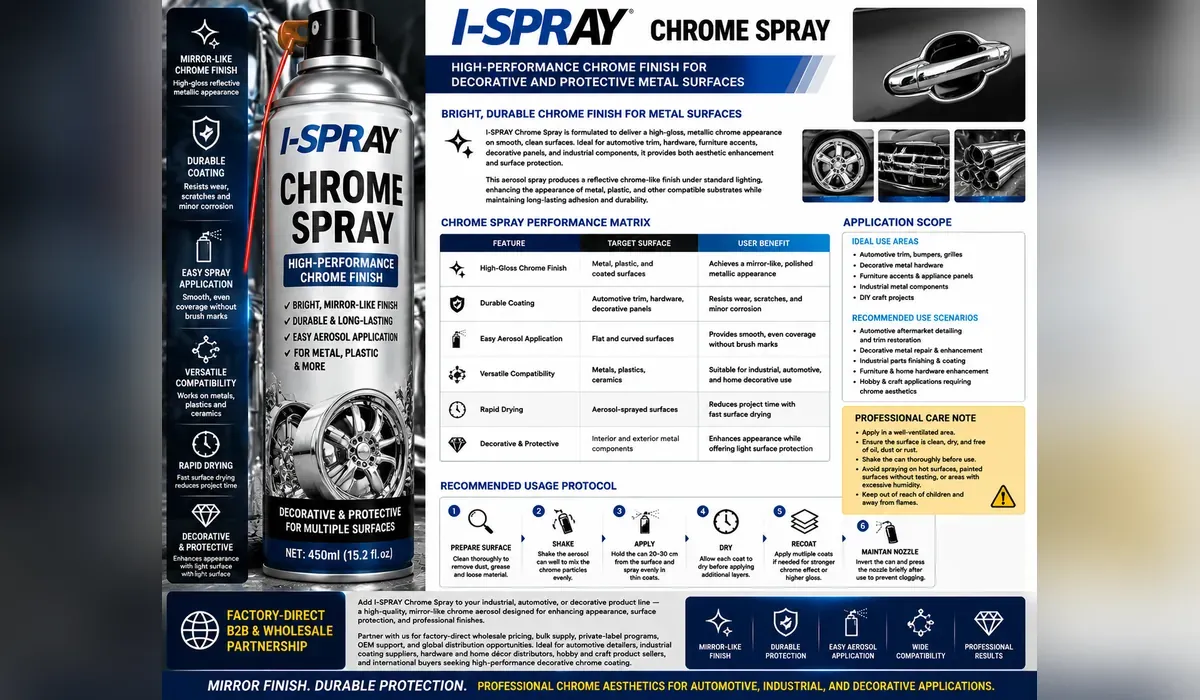
A useful response identifies the proposed SKU, component set, and documents. A catalog image is not a quotation or technical proposal.
Final recommendation
Approve an airsoft green gas supplier only after checking equipment compatibility, gas transfer, valve and can consistency, temperature-related performance, labeling, safety documents, transport feasibility, and repeat production.
To request a product and packaging review from Huajie Chemical, send the destination countries, equipment mix, climate, preferred can size, sales channel, and forecast volume.
FAQ
What should an airsoft retailer test before buying green gas?
Test nozzle fit, transfer, leakage, valve recovery, can condition, consistency across multiple cans, performance under relevant controlled temperatures, label clarity, and compatibility with representative equipment.
Is all airsoft green gas interchangeable?
No. Formulation, pressure behavior, valve, nozzle, equipment compatibility, and intended conditions can differ. Follow equipment guidance and the exact product label.
Can green gas be sold under a private label?
Private-label supply may be available. Confirm the final formula or grade, can, valve, nozzle, artwork, warnings, carton, documentation, MOQ, lead time, and destination-market requirements.
Can airsoft green gas be shipped by air?
Pressurized products can face dangerous-goods restrictions and carrier-specific rules. Eligibility depends on the exact classification, packaging, quantity, route, and carrier. Confirm the plan with the supplier, importer, and qualified logistics provider before production.
What documents should an importer request?
Request the current SDS, transport classification and related shipping information, product specification, label file, packing details, batch identification, and any country-specific documents required for the final SKU.