Jul 23, 2026Buying Guides
Personal Care Aerosol Manufacturer: OEM Guide
A B2B guide to choosing an OEM personal care aerosol manufacturer for sprays, mists, mousses, foams, packaging, testing, compliance, and private label supply.
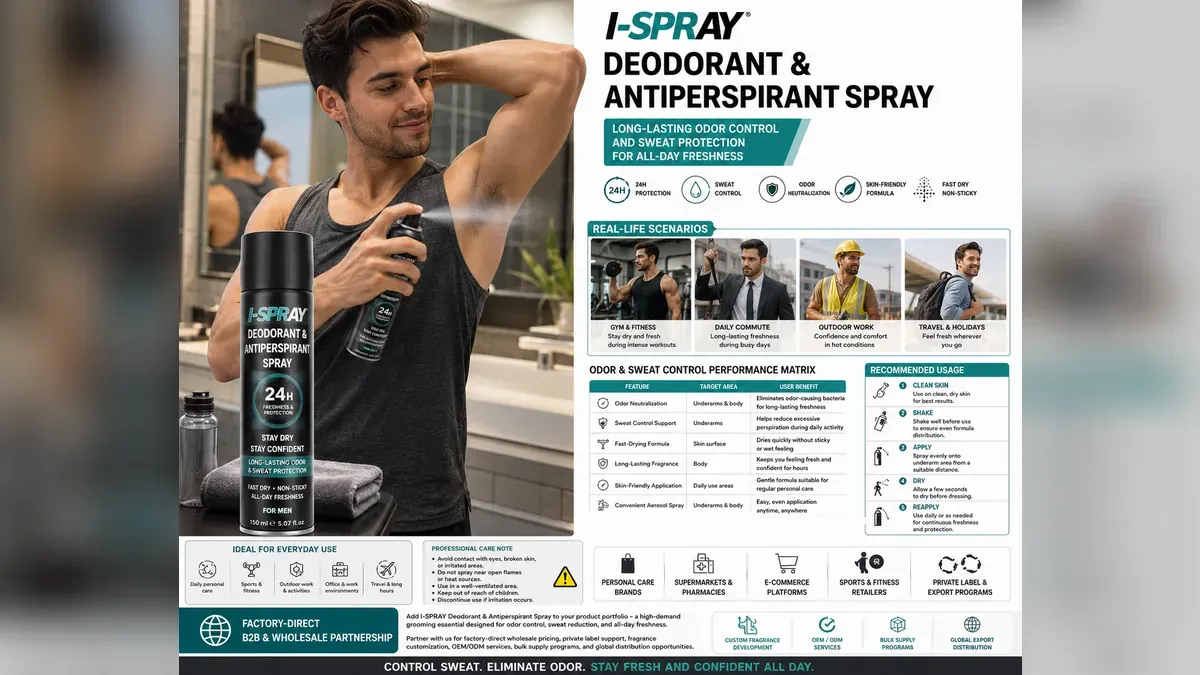
A personal care aerosol manufacturer is not simply a filling contractor. The formula, propellant, can, valve, actuator, label, and production controls must work as one stable product throughout its intended shelf life.
A facial mist, sunscreen spray, shaving foam, dry shampoo, styling spray, and mousse each need different hardware and test criteria. Particle size matters for a mist; foam structure matters for shaving products. Dose control, residue, skin feel, and valve behavior also change by format.
Start the supplier discussion with the intended user experience and destination market. A stock-can image and price list do not establish whether the product will work.
Define the product format and user promise
The term “personal care aerosol” covers several distinct delivery systems. Huajie's Personal Care category includes deodorant and antiperspirant spray, post-sun soothing spray, facial hydrating mist, sunscreen spray, shaving foam, hydrating setting spray, hair-removal mousse, temporary hair-color spray, styling spray, foam hair wax, exfoliating mousse, and dry shampoo.
Before requesting samples, define:
- product format: mist, continuous spray, powder spray, foam, or mousse;
- target user and usage occasion;
- intended body area and application method;
- desired finish: dry, dewy, invisible, matte, soft, flexible, or high hold;
- fragrance direction and intensity;
- fill size, price position, and retail channel;
- target countries and launch claims.
“Premium” is not a technical specification. Replace it with measurable requirements: mist fineness, visible residue, foam density, spread, drying time, or discharge consistency.
Evaluate the complete delivery system
Two cans with similar bulk formulas can behave differently because of the valve, actuator, propellant, pressure profile, and package geometry.
For a mist or spray, review:
- spray angle and coverage;
- droplet size and uniformity;
- wet spots or concentrated jets;
- application distance;
- dose per second;
- actuator force and control;
- clogging, sputtering, or leakage;
- performance near the end of the can.
For a foam or mousse, review:
- expansion and density;
- structure after dispensing;
- spreadability and cushion;
- collapse time;
- stickiness and residue;
- valve cleanliness after use;
- output consistency across storage conditions.
For example, I-SPRAY Shaving Foam is described as a dense foam for retail and professional grooming. Test its density, spread, razor glide, skin feel, fragrance, and valve cleanliness with the brand's own user panel and directions.
I-SPRAY Sunscreen Spray is listed as a broad-coverage spray for outdoor use. Sunscreen claims are tightly controlled in many markets. Review the final formula, test evidence, directions, warnings, label, and registration route for each destination before launch.
Confirm formula and package compatibility
The package is part of the formula system. The final specification should identify the bulk product, propellant, can and internal coating, valve cup, gaskets, dip tube, actuator, overcap, decoration, and carton.
Ask how the manufacturer evaluates:
- chemical compatibility between the formula and package components;
- leakage and seal integrity;
- can corrosion or deformation;
- pressure and discharge behavior under the agreed conditions;
- valve clogging and actuator performance;
- fragrance or active-ingredient interaction with seals and coatings;
- product appearance, odor, texture, and separation over time;
- usable product evacuation through the end of the can.
A later change to the fragrance, color, active, solvent, propellant, gasket, valve, or can coating may invalidate earlier compatibility work. Record and approve changes before repeat orders.
Separate cosmetic experience from regulated claims
Claims determine what evidence and legal route a product needs. Sunscreen, antiperspirant, hair-removal, insect-repellent, treatment, and therapeutic claims are classified differently across markets.
The project team should create a claims table with four columns:
Proposed claim | Evidence required | Target market | Approval owner |
|---|---|---|---|
Fine or even mist | Spray-pattern or panel evaluation | All planned markets | Brand and manufacturer |
Long-lasting hold | Defined performance test | Planned cosmetics markets | Brand |
SPF or broad-spectrum protection | Market-recognized testing and documentation | Country specific | Brand/importer/regulatory adviser |
Antiperspirant or therapeutic effect | Classification and evidence review | Country specific | Brand/importer/regulatory adviser |
Keep a claim off the artwork until its evidence, geographic scope, and approval owner are clear. Link the final label to the final formula and package version.
Review manufacturing and quality controls
Ask the supplier how it reproduces the approved product from batch to batch. Relevant controls include:
- incoming raw materials and packaging components;
- formula batching and identification;
- fill weight and propellant charge;
- crimping and seal integrity;
- leakage testing;
- spray or foam output;
- can appearance, printing, coding, and cap fit;
- batch release and traceability;
- retained samples and complaint investigation where applicable.
Methods vary by product and factory. Put the attributes that affect acceptance into the written specification instead of leaving them as subjective expectations.
Choose between a ready formula and a custom formula
A ready formula saves time when it already fits the market and brand. Custom development makes sense when the buyer needs a distinct sensory profile, active system, performance level, ingredient policy, or claim.
Compare the two routes:
Development route | Advantages | Questions to confirm |
|---|---|---|
Ready formula | Faster sampling, known manufacturing route, lower development effort | Can claims, fragrance, color, and packaging be adjusted? Which test data cover the final SKU? |
Custom formula | Greater differentiation and closer brand fit | Development fee, sample rounds, testing plan, MOQ, ownership, timeline, and change control |
Customize for a clear product reason. Changing a stable formula only to call it exclusive adds testing cost without necessarily improving the user experience.
Use a staged OEM development process
1. Product brief
Provide the target user, format, sensory profile, claims, package, country, channel, volume, and timing.
2. Technical feasibility review
Confirm whether the proposed formula, claims, can, valve, and decoration can work together and what testing is required.
3. Samples and application evaluation
Test several units for spray or foam, skin or hair feel, residue, fragrance, drying, packaging function, and user instructions.
4. Stability and compatibility plan
Agree on the test conditions, duration, checkpoints, acceptance criteria, and responsibility for market-specific evidence.
5. Artwork and documentation approval
Approve the final label text, ingredient presentation, warnings, directions, batch coding, SDS, transport information, and any market dossier.
6. Pilot and production approval
Inspect finished units against the signed specification before the mass run and retain the approved reference.
7. Post-launch control
Track complaints, valve or leakage issues, sensory feedback, and market performance. Feed the findings into the next production order.
Questions to ask a personal care aerosol manufacturer
- Which formats and current formulas match our brief?
- Which target markets have you previously supported for this product type?
- What can, valve, actuator, and cap options are compatible with the formula?
- How do you test spray pattern, foam quality, leakage, stability, and corrosion?
- What evidence supports each proposed claim?
- Who owns the formula and development results?
- What are the sample stages, MOQ, lead time, and component constraints?
- How are batch consistency, traceability, and changes controlled?
- Which documents are included for export, and which are the buyer's responsibility?
A useful answer includes a development process and product-specific documents. “Customization is possible” is not enough to assess the project.
Final recommendation
Choose a personal care aerosol manufacturer only after reviewing the user experience, formula, delivery hardware, package compatibility, testing, claims, quality controls, documents, and repeat-order process.
For a feasibility review with Huajie Chemical, send the product format, destination market, proposed claims, packaging direction, forecast volume, and launch schedule.
FAQ
What personal care aerosol products can be made under private label?
Possible formats include deodorant sprays, facial mists, post-sun sprays, sunscreen sprays, shaving foam, setting spray, dry shampoo, temporary hair color, styling spray, and several mousse products. Confirm current formula and target-market availability with the manufacturer.
Can I customize the fragrance and packaging?
Customization may be possible, but fragrance and package changes can affect compatibility and stability. Confirm the available options, minimum order, testing impact, and lead time before approval.
How long does OEM aerosol development take?
Timing depends on whether the buyer selects a ready formula or custom development, the packaging components, sample rounds, stability and compatibility work, market documentation, and production schedule. Request a milestone plan for the exact project.
Does the manufacturer handle sunscreen or antiperspirant registration?
Responsibilities vary by market and commercial agreement. Ask the manufacturer what documents it provides, then have the brand owner or importer confirm classification, testing, registration, and label obligations with a qualified adviser.
What should I include in my first inquiry?
Include the product format, target user, market, claims, can size, sensory direction, estimated order volume, required certifications or policies, and desired launch date. A specific brief produces a faster and more accurate feasibility response.